Last Word – Bruce Dorn: Continuous Lighting
March 1, 2010
Bruce Dorn’s seminars show photographers how to utilize continuous light sources to create visual magic. Why use continuous light sources when flash works just fine? According to Dorn, there are many advantages. First, what you see is what you get—a big advantage over guessing how it will look with flash. Second, continuous sources allow one to enhance low-level ambient light with a more subtle application of supplemental illumination, something that can be a challenge when using a simple speedlite.
Dorn mentions that he was an early tester of the Canon EOS 5D Mark II. This upgrade of the 5D has more resolution and better low-light sensitivity, two features many photographers were hungry for. But they will also get something most of them didn’t know they needed: HD video capability. Dorn is very impressed with the camera’s mixed-media potential and predicts breathtaking changes in the wedding photography marketplace: a future filled with “fusion-style,” cutting-edge, multimedia products that clients will love and come to demand. Dorn feels that in this competitive marketplace, photographers who master motion capture and the magic of continuous light will thrive.
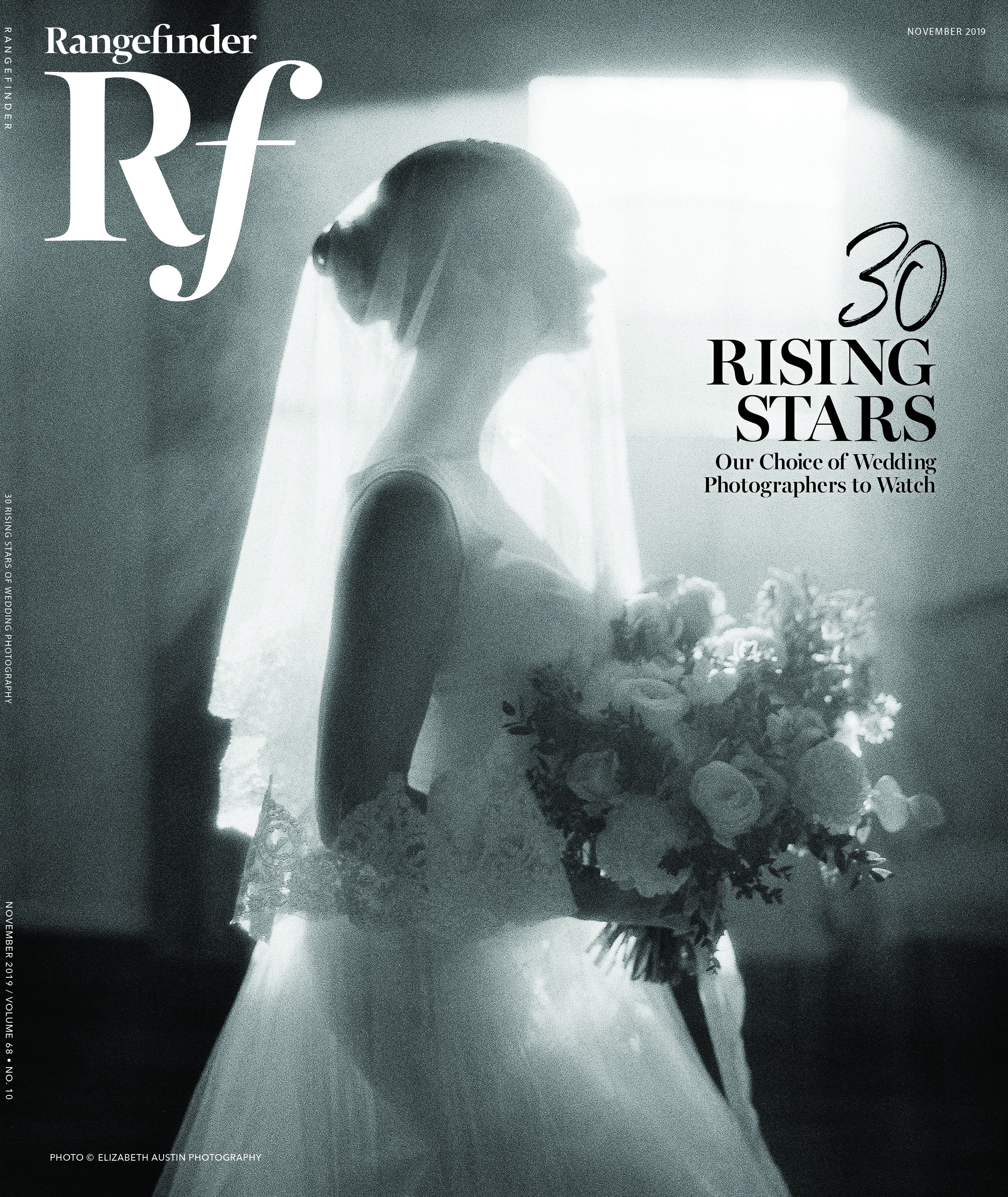
This image was taken at The Orpheum Theatre, a recently renovated opera house in Phoenix, AZ. It features one of Dorn’s favorite continuous light sources, the Frezzi Mini-Fill. Dorn notes the light is compact but robust and uses full-spectrum, color-correct bulbs identical to those used to illuminate fine art gallery presentations. In this case the Frezzi was equipped with a 100-watt, 3200-degree Kelvin semi-spot PAR-style lamp. An optional flip-down dichroic filter can be added to convert the standard tungsten-balanced lamp to daylight, but photographers on a budget can substitute a 50-watt 4700-degree Kelvin lamp at considerably less expense.
This image was created using two Frezzis—one above and to the left, to create a Rembrandt lighting pattern on the bride, and another on the background, to add dimensionality and separation. Elaborating upon other options in continuous lighting, Dorn mentions the Litepanel brand of lighting products; compact flood or spot sources featuring an array of light emitting diodes (LEDs). LED light sources are unique in that they are natively daylight balanced and can be dimmed without a significant change in color temperature. They are potentially safer too. Even after long periods of activity, they remain cool to the touch—not an insignificant consideration for the fast-moving photographer.
Dorn notes that he typically does some “merciful retouching” to most of his images. In this case, the bride’s skin was smoothed with the subtle application of his Hollywood Glam retouching action. This action adds a layer with a softened copy of the original layer and a layer mask that allows him to paint back in areas that he wants to remain crisp.
To see more of Bruce Dorn’s photography, visit his Web site: www.idcphotography.com.
Writer/photographer Larry Brownstein is based in Los Angeles, CA. He has authored several photography books, is represented by Getty Images, Alamy and California Stock Photo and has a growing wedding and portrait photography business. His Web site is www.larrybrownstein.com. His blog is https://larry brownstein.bigfolioblog.com.
Related Articles
Why Felix Kunze Thinks We’ve Been Overcomplicating Lighting (And What He’s Doing About It)
July 24, 2025
When it comes to lighting in photography, most of us instinctively reach for soft, flattering light. We diffuse our flashes, shoot through umbrellas, and seek out cloudy days. But what if I told you that some of the most striking portraitYou know the moment: your subject is ready, you’ve got about five feet of space to work with, and the...
More »

How to Photograph Fireworks for Couples Portraits
October 24, 2024
Fireworks aren’t just for the Fourth of July! You’ll find them regularly at theme parks, sporting events, and maybe more surprisingly, at weddings. For the latter, fireworks offer photographers a wonderful opportunity to capture epic couples portraits with a truly unique backdrop. Of course, if you’re not familiar with how to photograph fireworks, there are some basic tips you’ll want...
More »

Why Top Photographers are Embracing Hard Light (And You Should, Too)
October 23, 2024
When it comes to lighting in photography, most of us instinctively reach for soft, flattering light. We diffuse our flashes, shoot through umbrellas, and seek out cloudy days. But what if I told you that some of the most striking portraits actually come from embracing hard light? That’s exactly what renowned photographer Roberto Valenzuela teaches in his groundbreaking new Dynamic...
More »