
Digital Photography: Evil Compacts, 40-megapixel Medium Format DSLRs, PMA & New Cameras
April 1, 2010
As expected there were no real surprises at PMA. The show was somewhat smaller than in past years as Anaheim did not have quite the draw of Las Vegas. Nonetheless there seemed to be a fairly positive response from attendees, as they liked the convention center facilities and the less flamboyant locale.
Sadly for the organizers, many well known companies passed on displaying their wares this year, including such famous makes as Canon, Hasselblad and Leica.
Pentax did not have a display but did invite selected dealers and media to a private showing of its new cameras. Even then it was only consumer cameras that were being shown. However, one did pique our interest. The upcoming $329 OptioW90 is a point-and-shoot 12.1-megapixel compact camera housed in a ruggedized body that looks the part. But the most intriguing feature is the inclusion of three bright LED lights for shooting close-ups. Pentax claims to be the first company to include LED lights on a camera although there are plenty of camera phones with LED flashes. I suspect this will become a common feature once LED flashes replace regular flashguns as they promise to be more efficient.
Nikon and Olympus had the biggest displays among the camera companies. HP, Fujifilm and Kodak also had big displays but much of their space was dedicated to printers and/or processing equipment. However, it was Sony, with a slightly smaller display area that captured most of the interest as it displayed some interesting prototype cameras and lenses under glass.
These included an upcoming alpha DSLR camera with full 1080p HD video capture and a not-so-monstrous 500mm f/4 lens. But the camera range that caught the eye of the media was a compact Mirrorless Interchangeable Lens camera, also known as a mirrorless DSLR or Electronic Viewfinder Interchangeable Lens (EVIL) camera. It follows in the footsteps of the Micro Four Thirds cameras from Olympus and Panasonic, except it will have a new APS-C sensor, which is bigger than a Micro Four-Thirds sensor. The new CMOS sensor uses Sony’s back-illuminated technology that promises to deliver less noise and be ideally suited for shooting HD video.
Not to be outdone, Samsung has also jumped on this potentially large segment with its previously announced NX10. A company official says Samsung will be concentrating on this NX series of cameras rather its “traditional” DSLR cameras, which have been closely related to Pentax DSLR cameras.
With all the development in this segment, which bridges the quality gap between traditional compact cameras and DSLRs, it makes one wonder just how long it will be before Canon and Nikon are forced to introduce competing models—if they do not want to be left behind. I’m sure they are working on them but probably hoping the segment does not become too popular as it will inevitably hurt their lucrative DSLR businesses, or should I say their lens business, which is probably where most profits are made.
Whichever way we look at it, the next year or even the next few months according to one Sony official, will be exciting as companies improve the video capabilities of their DSLRs and we finally get more compact cameras that can deliver images equal to the quality of ones captured by a DSLR.
New Medium Format Cameras
Last year Leica introduced its S2 medium format DSLR camera with a 37.5-megapixel sensor. It promised that this camera would handle like a “35mm” DSLR while delivering far higher quality images. When I originally saw the camera at Photokina in 2008 the price was not announced. I hoped it would be around $10,000 but alas it costs $22,995 for the body only. I briefly tried one of these cameras and did indeed find it easy to handle while delivering incredibly detailed images.
At the beginning of February Hasselblad announced its new H4D-40 camera body with a 40-megapixel sensor. It is already on sale and costs $19,995 including an 80mm lens.
At the beginning of March Mamiya introduced the DM40, which also has a 40-megapixel sensor, and costs $21,990 for the camera with an 80mm lens.
Just two days after Mamiya’s announcement Pentax finally unveiled its 645D camera, which has a 40-megapixel sensor. It goes on sale in Japan in May for around $9500 for the body only. Pentax has not announced when it will go on sale in the United States or what the exact U.S. price will be. Nonetheless, this camera is sure to shake up the high-end digital market not only for Hasselblad, Leica, Mamiya and the other smaller players but also for Canon and Nikon as it will only cost a couple of thousand dollars more than their top-of-the-line DSLRs. At low ISO settings under controlled lighting conditions in a studio setting the Canon EOS-1Ds or the Nikon D3x cannot be expected to deliver the same quality since their sensors are half the size and have fewer pixels.
Normally, I consider medium format cameras to be beyond the budget for the vast majority of wedding and portrait photographers. But at a cost of around $10,000 it becomes more justifiable, especially if one is looking for a camera for shooting groups where close-up detail becomes tough to obtain with a small sensor. Priced right I suspect there may be a resurgence in interest in these cameras, especially as they can use lenses from “old” film cameras.
Wooden Photobowls and Wooden Cameras
Would you like something different to offer clients? How about a photograph laser-engraved in a wooden bowl made in Alaska from Alaska Birch? The Great Alaskan Bowl Company displayed its photobowls for the first time at PMA. Professional photographers can sign up on their Web site (www.photobowl.net/apply) to get wholesale prices on custom made wooden bowls. They come in two sizes (7-inch or 9-inch) and are intended for display only—so don’t toss a salad on your bride and groom’s picture.
Speaking of wood—how about a beautiful view camera made from Black Walnut and aluminum? The Shanghai Shenhao Camera Company (www.shen-hao.com) displayed a variety of handcrafted view cameras at PMA that cover a range of sizes from 4 x 5 to 7 x 17. The cameras are difficult to find in the United States but if you Google “shenhao cameras” you’ll find a couple of specialist stores carrying them. Kodak has also announced that its new Ektar film is now available in 4 x 5 or 8 x 10 sizes, which means it is possible to use these cameras with the newest film on the market.
Not surprisingly, the exotic look of these cameras urges me to try my hand at large format photography again. It’s something I have not done once during the past 35 years. Old is new again, I guess.
Safari Books Online
eBooks have been gaining in popularity thanks mainly to the Amazon Kindle and Sony’s Reader. It looks certain that Apple’s iPad will popularize them even more, especially as it will offer color, and photographs should show up really well.
A quick check of books available on the Amazon and Sony sites shows a limited range of photo books available for purchase. Undoubtedly, there will be a lot more on Apple’s site within a few months.
In the meantime there is another source for eBooks that contains hundreds of books and videos of interest to photographers. Safari Books Online (www.safaribooksonline.com) is a digital library containing most books published by Peachpit Press, Rooky Nook, New Riders, O’Reilly and dozens of other tech publishers. As a subscriber one can view the books online and download some sections and/or complete books depending on the agreement between Safari Books and the original author or publisher.
Peachpit offers many titles that cover computer programs such as Photoshop and topics on digital photography as well as nearly all computer topics from designing websites to coding programs. Rooky Nook is a specialized publisher that publishes books on photography.
If you only occasionally read a book or borrow one from the library this service will be overkill but if you find yourself looking at all the books in a bookstore, wishing you could buy many of them, this service could prove fruitful. For $252.99 a year you can preview all titles and read the full content of 10 books each month. An annual subscription of $472.89 a year gives you full online access to all titles. A subscriber can also save up to 35% on the purchase of an actual printed book.
You don’t need a special reader to view the content, as the service is geared to use on a regular computer. However, many of the books are viewable on an iPhone and I presume even more will be offered for the iPad.
If you enjoy having access to books and cannot afford to buy all you want or, like me, are running out of physical space to shelve them all, Safari Books Online could be a worthwhile subscription.
John Rettie is a photojournalist who has been covering digital photography since its earliest days. He resides in Santa Barbara, CA, and readers are welcome to contact him directly by email at [email protected].
Related Articles
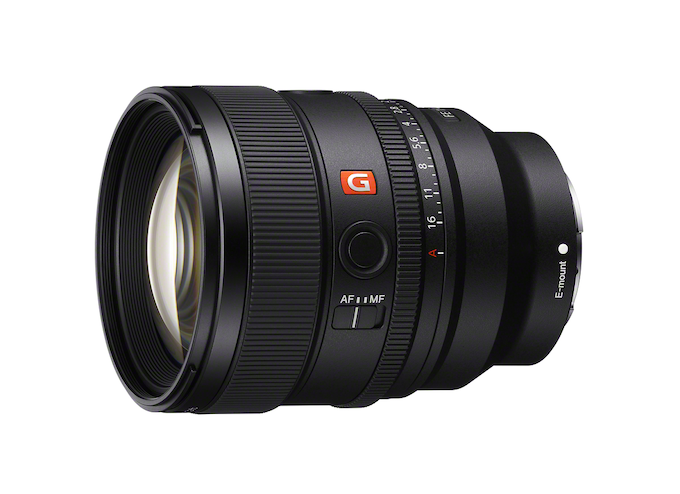
Sony’s Nex-Gen FE 85mm f/1.4 G Master II Prime Lens
September 24, 2024
For many photographers, a fast, 85mm prime lens is a dream lens. It’s perfect for a variety of portrait styles and can produce the dreamy bokeh that is the hallmark of large aperture glass. The latest 85mm prime on the market is the second generation Sony 85mm f/1.4 G-Master II. The original was introduced eight years ago, to meet (or...
More »
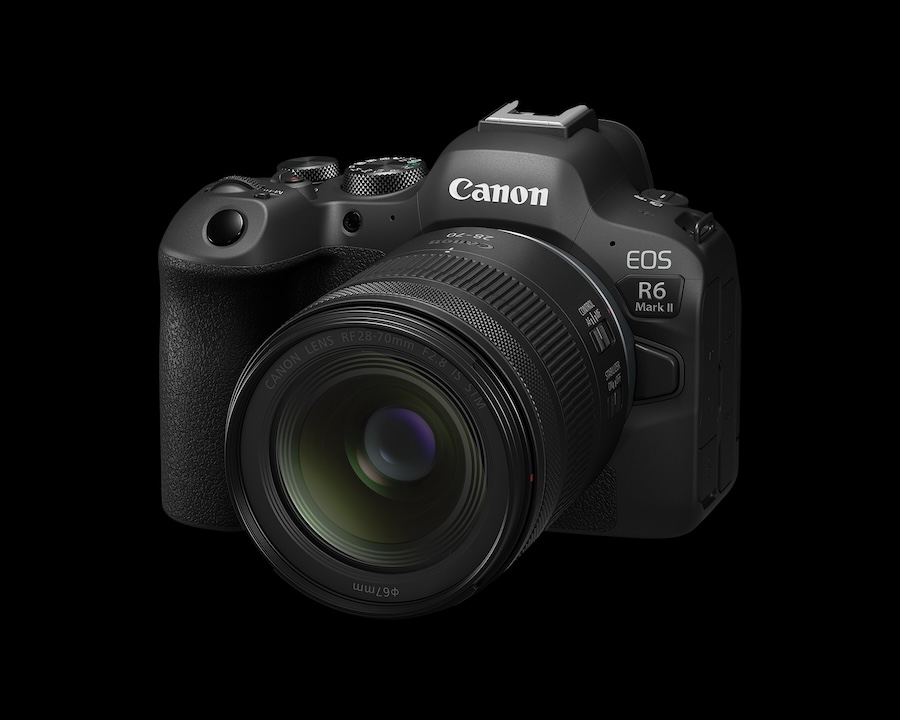
Canon Announces New RF28-70mm f/2.8 Zoom Lens
September 19, 2024
Canon released a new standard zoom with its RF28-70mm f/2.8 IS STM lens. This lens provides a versatile focal range similar to the RF24-70mm f/2.8 L USM lens but at less than half the price: $1,099 vs. $2,499. Granted the L designation of the older lens is, at least partly, responsible for the price difference but the new 28-70mm will...
More »

Canon Launches Two Pro-Level Cameras
July 18, 2024
Canon has officially launched two new, pro-level R-series mirrorless cameras: the 24-megapixel EOS R1 with its high speed performance and the 45-megapixel, high resolution EOS R5 Mark II. Not surprisingly, the R1 with its 40fps burst shooting will appeal to sports photographers and photojournalists—hence its built-in Wi-Fi and Ethernet. Of course, we expect to see this camera in action at...
More »