
Private Worlds: Mark Robert Halper
January 1, 2010
Whether he is shooting a still life, an advertising campaign, or a portrait, Los Angeles-based photographer Mark Robert Halper takes the mundane and discovers the extraordinary, making the ephemeral and the personal the focus of his camera. “I don’t compartmentalize my shooting,” says Halper. “With each image I try to home in on that something—and there is always something—that resonates with me, whether I’m photographing the line of a flower, the curve of a mouth, or capturing an emotion. I love the challenge of working with what is at hand.”
Most important for Halper are the content and the design of the image. “Putting a fine art label on a photograph doesn’t make it anything at all,” says Halper. “If I open up a book of Avedon images, I don’t differentiate between those that were shot for an ad campaign and those that were personal work.”
The Sonus campaign Halper shot concurrently with his new body of work exemplifies the photographer’s philosophy of art informing life. Creating backgrounds using materials inherent to this high-tech industry such as Mylar, Halper depicted his subjects conveying the same intense engagement in the moment evident in his personal work.
With an interest in imaging that began in high school—he spent those three years experimenting with making movies—Halper graduated from college in 1987 with a degree in international relations. “When I graduated I had no idea what I wanted to do, but I found myself picking up my camera the day I completed my last final, and ended up asking for a darkroom as a graduation present.” His first job, pre-Internet, was taking pictures of homes for a real estate firm that ended with the 1987 economic crash. A number of extension courses on how to become a commercial photographer followed. “Naïvely, I actually thought I’d learn how to become an advertising photographer when I took a 12-session course in advertising photography. What I did learn was how to see critically, and that is something that has stayed with me throughout my entire career.”
Halper’s new and ongoing work from the last year and a half concerns an exploration of the way the camera “sees what it sees” and the degradation of the specificity of the image. Striving to capture a painterly effect, which he achieves primarily in-camera and processes in Adobe Lightroom, Halper focuses on accentuating the mood he’s working to capture.
To create these full-frame un-retouched images, Halper worked extensively with actors in the development of this series. “Actors have few walls and impediments to expression. I want to work with someone who is comfortable accessing private emotion in a public way, and the job of an actor is to open themselves up for the world to see. You can ask them to go to very personal places.”
Through conversation with his subjects Halper tapped into their personal emotional past. In the majority of these images, the sitter does not engage the camera. We see them instead encapsulated in an interior world expressed through gesture and subtle movement. As portraits, they plum emotional depths and private worlds, becoming what Halper refers to as shadow portraits. “These are not representations of reality, but a through-the-glass dark kind of thing. What starts to happen is a breakdown of the physical world, a paring away until the viewer is left with only the emotional resonance.”
In “Image 1,” the sitter, an actor originally from Texas, had experienced isolation and loneliness at the point in her life that involved her decision to pursue an acting career. Halper dressed her in a college sweatshirt, the life period of the experience she drew on for the image. Her downward gaze conveys dejection, accentuated by Halper’s use of tones of blue in the final image to evoke emotional estrangement.
All handheld, the images never replicate themselves. “I don’t have preconceptions about an image when I go into a shoot, I don’t think about how I’ll frame a photograph. The technique I use is rather organic, and it changes from frame to frame. Whenever I shoot people, I shoot lots and lots of frames. So many variables can throw off an image, and you don’t really know what you have until the shoot is over. What I want in the end is to capture the emotions that relate to the personal experiences of my subjects. The end result sometimes surprises me and looks very different from what I initially anticipated.”
Halper’s images often move beyond the specificity of the sitter’s individual situation to convey more universal emotions. They become metaphorical portraits for life’s larger emotional experiences, concentrated through the lens of individual lives. In “Image 2,” Halper focused on the loss experienced by an injured young dancer who was physically unable to continue her craft. Ultimately, her inability to dance as she intended becomes unimportant. What is conveyed is the experience of loss. In “Image 3,” a woman holds a film script and gazes through a window. “For actors it’s a challenging thing to become successful,” says Halper. “She had not yet achieved the level of accomplishment she was after. I portrayed her here as a voyeur, the one who has not yet been invited in.”
In many of the photographs, what you perceive and what you’re actually looking at are very different things. “Image 4,” for example, explores physical fear. Halper’s subject was a young woman who had grown up in Russia, in circumstances where personal safety was often in question. While the image appears to be set outdoors at night, Halper actually worked in a bathroom lighting the sitter with two lights, bouncing light off the bathroom mirror behind her.
Halper often takes couples as his subject, looking to capture their relationship. “I’m shooting a couple, not a double portrait, and the process of discovering how I see them is intuitive. For me, a good photo is always about one thing and one thing only. Everything in the image points towards that one perspective. The idea is generally simple, despite the resulting image’s visual complexity.” “Image 5” grew out of a testing session where Halper invited in a number of couples to pose. “We were outside. My direction was really about pushing them together. There was an intensity and passion between these two that came through.”
“Image 6” shows an Asian woman and Latin man with an underlying chemistry that felt not only physical but emotional— a mystery with its top note, elegance. “They were both quite beautiful. I really saw them as creatures of the night and I wanted to create a mood that felt like evening.”
In a different twist, Halper has recently turned his search for unusual perspectives on the inanimate. “I spent a few afternoons walking around my house, choosing objects I felt drawn to working with and settled on a number of toys.” He eliminated scale references, replacing it with intriguing ambiguity—a model airplane he used in a commercial shoot as a prop that is the size of a phone, takes on the dimensions of a building; a small plastic dinosaur the size of an iPod becomes a menacing giant (see pg. 64). “I went with what felt right to me, some of them didn’t work, but many did.
“When you’re a kid, you play with these things and they become real. You give them life. In photographing toys I look to capture their reality, that world that they live in and the world that I spent so much time in as a kid. I’m showing the viewer how I see them. That’s what photographers do—we show other people our perspective of the world.” View his work at www.studiomark.com.
Judith Turner-Yamamoto’s articles have appeared in Elle, The Boston Globe, Finnair, the Los Angeles Times, Travel & Leisure and Southern Accents, among others.
Related Articles
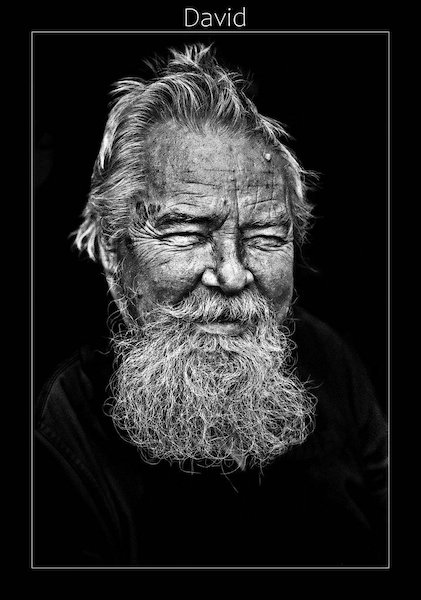
Capturing Humanity: Crombie McNeill’s Portraits of the Homeless
July 19, 2023
When Canadian photographer Crombie McNeill first started his career in photojournalism in the early 1960s, a peer suggested that he visit the Union Mission and take some portraits of the homeless people there in order to build his portfolio. Based in Ottawa, Canada, for the entirety of his career, McNeill entered the Union Mission skeptical that anyone would allow him...
More »
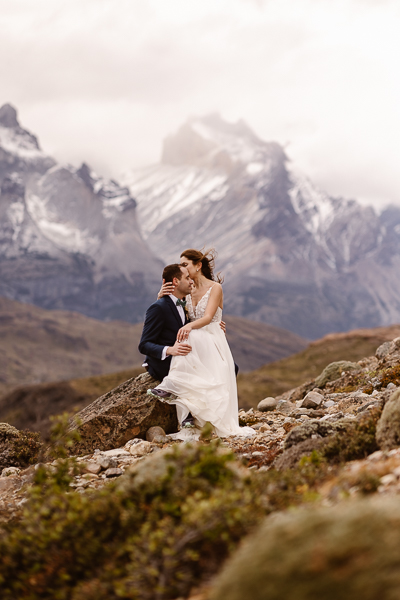
From the Rockies to Patagonia: Elopements that Go the Extra Mile
June 28, 2023
With the eye of an eagle, the endurance of a mountain goat, and the joy of a wildflower in the breeze, Chilean-born Andrea Enger was destined to become a photographer of adventure elopements. She has overcome her share of challenges as both a Latina woman and immigrant, pioneering into photography with her heart set on a life of creativity. Now...
More »
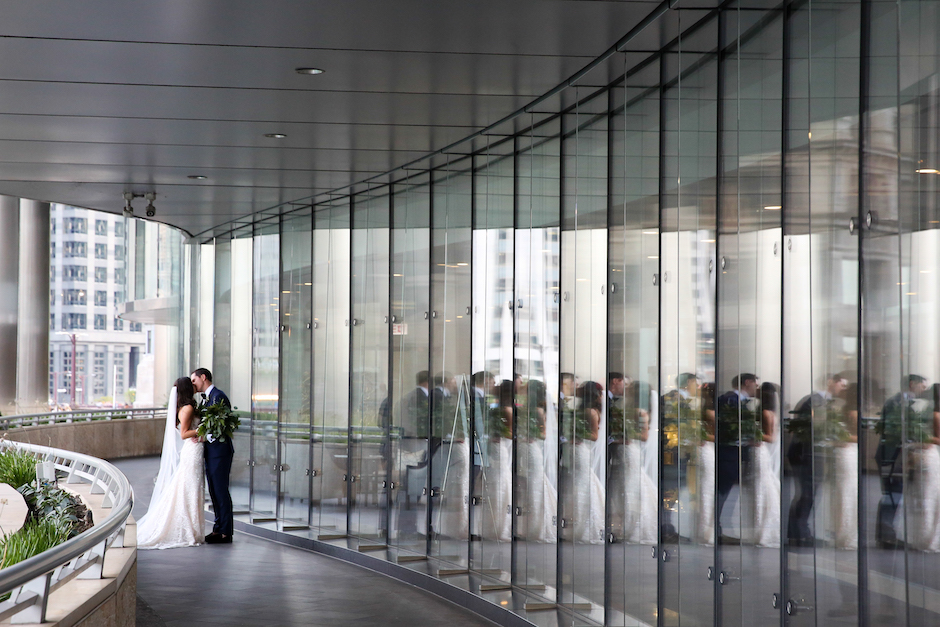
Robyn Lindemann Finds the Light in her Darkening World
February 27, 2023
Robyn Lindemann had to give up her wedding business after being diagnosed with retinitis pigmentosa. Now she's traveling the world before she goes blind.
More »