Poetry in Motion
April 1, 2011
South African-born photographer Dirk Rees loves inventive, moody lighting. He mixes together an intoxicating blend of movement, lighting and subtle color to create a sense of cinematic narrative and atmosphere in his photographs. Dancers are picked out with light as they leap across dark voids, models burst from glass boxes in a forest, women twirl in layered skirts in a warm, summery haze and lone figures on the beach at night are caught in delicately colored light during intimate moments of reverie.
The power of the London-based photographer’s work may owe much to his compelling compositions and his ability to capture a dynamic moment, but it is his manipulation of lighting that creates the atmosphere of his scenes. “I feel really strongly about light,” he says, sipping coffee in a central London café on a chilly afternoon. “There’s lighting and there’s lighting. It can look horribly wrong or fantastically beautiful. I love really pin-pointing it and getting it right.”
Dirk became a Hasselblad Master in 2009 and recently created a series of images for their book based on the theme “emotion.” The resulting series features models jumping and twisting through clouds of dust, caught in beams of warm colored light in a derelict warehouse setting. It combines a fashion-style shoot with a filmic aesthetic and the images have a hot, airless intensity that Dirk explains, is created by the lighting. “You think about what mood and character you want to create round the images, and the only way to do that was through lighting it, in this case.”
Motion was also a key concept in the shoot, so perhaps it is no surprise that Dirk incorporated the work into a film, an atmospheric short that seemed to emerge naturally out of the shoot’s concept. Both stills and motion were planned in a storyboard, an approach that Dirk borrows from the film world. “I have to storyboard for projects that are complex, especially where you’re trying to do stills and film at the same time,” he says. “You’ve got to have a strong structure in place.”
Drawing experience from his time working as an assistant for a production company in South Africa, film provides inspiration for his approach to lighting in other ways too. “In films you see a lot more attention to color in order to create a scene and a mood, and that’s what I always fall back on,” he says. He uses the example of a shoot on Bondi Beach at night where some friends of his are captured in close-up with a combination of warm orange and cool blue lighting. The images are infused with a delicate, dreamy atmosphere. “I work with a range of different filters which I find relevant or appropriate in order to create emotions,” he explains.
While his shoots sometimes run seamlessly into moving images, and draw inspiration from filmic lighting, the theme of motion also runs through much of his still work. His portfolio abounds with athletes, dancers, gymnasts, capoeira artists and fighters captured in dynamic movement. “I love anything with motion—anything with a bit of a flow,” he says.
But these are not simple sports photos. Dirk’s dramatic, cinematic take on lighting takes them to a new level. Athletes such as a high bars gymnast and water polo players are rendered as performers when their movements are dramatically lit against a dark background, and martial artists are illuminated by a strong, single light source, creating beautiful highlights and shadows.
Asked how he developed his unique style, Dirk says it is a culmination of years of work. “I started developing my own work about 14 years ago. Just testing, doing portraits here—fashion tests there,” he says. During much of this time he was also assisting and learning from others in the industry, working his way up. “I have a strong production background which is really great and beneficial in all aspects,” he reflects. “I’m a strong believer in learning the ropes as much as you can to find your own outlook on how you want to portray yourself and your images.”
Dirk’s photographic journey began in South Africa, where he was born. Although at the age of seven his mother had taken him to live in Germany, he always knew that he wanted to go back to Africa, and after he finished studying he ended up working on a farm in Zambia, where he started
taking pictures.
Dirk went on to assist many respected international photographers all over the world, before joining a then small production company called Cape Town Productions. “I started as a runner there,” he says. “That was still and moving images. I concentrated solidly on South Africa for the first five years, and then went to the U.K. and Germany and started assisting there.” He believes that he owes his current success to this experience. “By having assisted so many different photographers over the years, you widen your horizons and you learn so much. It is really rewarding,” he says.
Although he has now achieved a strong identity in his work, Dirk doesn’t consciously strive toward a specific cinematic look, preferring to describe his work in looser terms, saying that he is always chasing an “undefined thing” that arouses his interest at any one time. “I just get really excited about photography,” he says. “If I photograph something I’ve got to make it exciting. I’m a little boy when it comes to it.”
In terms of achieving his expertise in lighting, he admits that it’s been a tricky task to get it right. “You learn and pick it up mostly by doing it,” he says. “I’ve had assistants working with me and I’ll ask them to light something. They think they’re doing the same light setup as I’ve been doing, but it’s just not there. So its something you learn to understand—you have to be able to judge it and address it accordingly when it doesn’t work.”
In his opinion, there are no rules to lighting, and his approach depends completely upon the task at hand. “Each job varies, and so will the choice of equipment,” he says. “I use daylight, continuous and flash and anything else I can get my hands on. I make the choice based on the brief and budget. For example, if you’re using an HMI light it’s really hard to shoot still photography when something or someone is moving. You’re not guaranteed sharpness or focus, so you’ve got to understand what is required. My lighting is put through its paces as I work with a lot of movement in sometimes very difficult environments.”
Although he regularly works for commercial clients, he prefers not to label himself as a commercial photographer. “All my work is a strong body of personal work—I don’t find that commercial,” he says. “I think there’s creativity and craftsmanship there, and it’s the ability to execute situations in a certain way. But within that I do get booked by clients to shoot commercial jobs.”
His ad work demonstrates his signature lighting flare. In his campaign for the British Film Institute Film Festival, for instance, bright light falling on people as they go about their ordinary lives renders them protagonists in a cinematic narrative, and in an adrenaline packed Sony PlayStation campaign his close-up subject was dramatically lit from the side with blue light from a slide projector.
In terms of postproduction, Dirk comes from the school of thought that you must capture a great image in-camera. “I appreciate that post is an important part of the process, but it’s not changing my photography,” he says. Dirk explains that he aims to capture beauty and perfection on the shoot, rather than leaving it until afterward. “It already has to look good in-camera,” he states. “I feel very strongly about that. That comes from the old days. If the Polaroid looked bad, you did it better.”
When asked what advice he might give to young photographers, he says: “Follow your dreams, but don’t be too disappointed if it doesn’t happen for you immediately. Successful photographers prime around 40. So you’re working for so many years and you’ve got to be prepared to work hard. Thankfully I have a few more years to go yet.”
Dirk sees a lot of assistants become disillusioned about how slowly their career is going, but advises them that persistence is the key. “Central London has more than 25,000 professional photographers so you have to put it in perspective. To make things even more difficult, this industry has changed so much in recent years you have to adapt fast, stay with the changes and persevere,” he says.
Looking back at his career to date, Dirk reflects that the joy of being a photographer is that the process of growing and developing your art never really ends. “You don’t get to a point, you just constantly develop, change and adapt, even if it’s in different ways,” he says. “That’s why I love it so much. It’s so rewarding and always different.
“If I can do this for as long as I live I’ll be very grateful, and I’ll look back on it and think—wow, I really had a great life.”
See more of Dirk Rees’ work at www.dirkrees.com.
Kate Stanworth is a British-born writer and photographer based in Buenos Aires, Argentina. She currently works as an editorial photo editor and writes on diverse aspects of art and culture in Argentina.
Related Articles
Capturing Humanity: Crombie McNeill’s Portraits of the Homeless
July 19, 2023
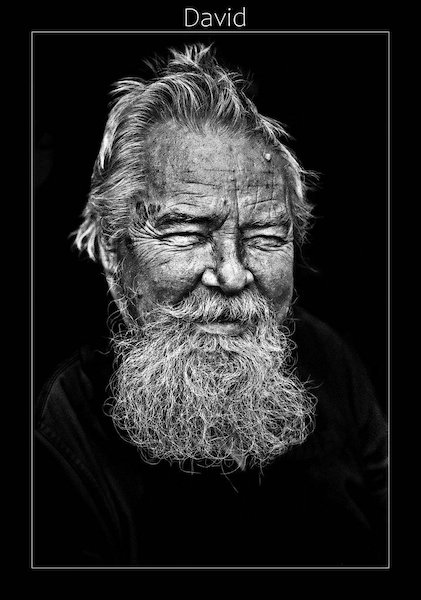
When Canadian photographer Crombie McNeill first started his career in photojournalism in the early 1960s, a peer suggested that he visit the Union Mission and take some portraits of the homeless people there in order to build his portfolio. Based in Ottawa, Canada, for the entirety of his career, McNeill entered the Union Mission skeptical that anyone would allow him...
More »
From the Rockies to Patagonia: Elopements that Go the Extra Mile
June 28, 2023
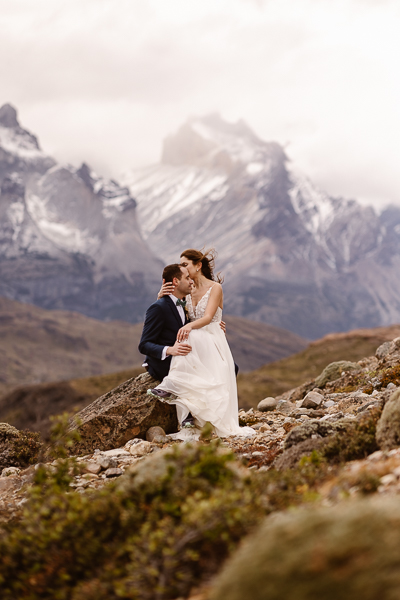
With the eye of an eagle, the endurance of a mountain goat, and the joy of a wildflower in the breeze, Chilean-born Andrea Enger was destined to become a photographer of adventure elopements. She has overcome her share of challenges as both a Latina woman and immigrant, pioneering into photography with her heart set on a life of creativity. Now...
More »
Robyn Lindemann Finds the Light in her Darkening World
February 27, 2023
Robyn Lindemann had to give up her wedding business after being diagnosed with retinitis pigmentosa. Now she's traveling the world before she goes blind.
More »