Eye of the Storm
May 1, 2011
Warren Faidley’s fascination with weather—in particular, the violent, destructive kind—began at an early age. He was born in Topeka, KS, in the heart of “Tornado Alley,” where as an infant, he rode out his first killer tornado. Later, while living in Mobile, AL, Faidley remembers his mother huddling him and his siblings in a hall during hurricane season. “That was fascinating because I knew there was something going on outside and I wanted to go out there.”
When Faidley was 12 he was swept away by a flash flood in Tucson, AZ, during monsoon season. He held his breath for as long as he could as the swift currents dragged him under. Luckily for Faidley, his foot found a rock, allowing him to stick his head above water and catch his breath. “That single event had a profound effect on my life,” Faidley says. “I knew then, and still do, that I had to live life to its fullest.” So why, with his penchant for weather, didn’t Faidley become a meteorologist? After all, weather is their thing. “I did not want to be a weatherman or a newscaster,” Faidley says. “I’m the kind of person that likes to be out in the thick of it when it’s going on, not locked up in a studio.” And so he became a photojournalist.
Faidley began his photographic career at the Tucson Citizen, but found the work to be less than thrilling. “I wanted to do a mix of things. I wanted to do the hardcore news. I wanted to do the big assignments,” Faidley says. “The problem with working for a newspaper is you have to photograph everything from ‘dog of the week’ to the rodeo parade. And although it’s fun to shoot those things, I really wanted to shoot the hardcore stuff.” Hence, Faidley had to find a way to be his own boss so he could pick and choose
his assignments.
Taking Stock
“I started out with the idea of shooting stock photography,” Faidley explains. “Fifteen years ago, there was a lot of money to be made in stock. I could sell one photo for more than I made in a week at the newspaper. Back then, there weren’t any digital cameras and the people shooting stock had experience. It was kind of a closed business and a good business to be in. I shot a lot of fashion, etc., but eventually realized no one was shooting weather. I thought ‘Wow, this is a good gig. I’m going to take advantage of this.’ So I turned the stock photography business into one that focused strictly on weather.” With little competition, Faidley found it was easy to take control of the market and started a Web site called weatherstock.com.
At the time, technology wasn’t like it is today—no Internet, no digital imaging, no laptops and no access to instant weather reports. When it came to predicting the weather, Faidley had only two resources to rely on—one was a 15-minute morning show AM Weather; the other was the National Weather Service office. “I had to teach myself what to look for—how clouds go up, how storms form and how they move and react. Nowadays, of course, people have radar and laptops in their cars. The thing that separates me from the crowd and makes me successful is, I have that visual experience I gained over the years. A lot of people rely too heavily on technology,” Faidley says. “I rely on visuals to decide where I’m going—it makes a difference.”
Capturing the Storm
Faidley hits the road with an assortment of high-end commercial video, digital and film cameras. “I shoot medium format film for lightning and digital for storm chasing, because I have to go through a lot more frames. The good thing about using digital cameras in hurricanes is I can keep going,” Faidley says. “I don’t have to open them up and reload film. If I use a digital camera with a very large card in it I can keep it completely encased the entire time I’m shooting. In the old days, I had to time where I was going to be when I ran out of 36 exposures, or else I couldn’t reload. That was a real hassle.”
When photographing lightning, Faidley still shoots with film because of the long exposure times. Shooting lightning with a digital camera is much more difficult, he notes. “For one thing, the batteries don’t last with that shutter open; it’s a drain. And then there’s the processing time; if I’m going to shoot lightning at a real long setting, it’s going to take a while to process and I may not be able to shoot again for a few seconds or minutes, depending on the camera. Using film cameras [for lightning] still pays off now, though digital cameras may get there some day.”
One of the things Faidley most enjoys about his work is getting a really good shot under the absolute worst possible conditions on Earth. “Most of what I look for [in a photo] is individual elements—such as color, composition and symmetry. Of course,” Faidley notes, “the other thing about weather is there’s a lot of gray. There isn’t a lot of color to work with. It’s a real challenge getting a green field or something to contrast the gray.”
Faidley, who has become a storm safety expert, also does a lot of consulting work with large corporations such as DuPont, as a marketing spokesperson for storm shelters.
Storm Chaser
“Each type of storm is different,” Faidley says. A hurricane, he finds, is the most frustrating storm to chase because there’s a 50-50 chance it will hit at night. And as a journalist out for photographs, hitting at night just won’t cut it. “At some point [when making my way toward a hurricane], I have to make a logistical choice to commit myself [to the storm]. And committing myself is expensive, because I usually have to fly out at the last moment.” For example, Faidley says he was halfway to Louisiana to photograph Hurricane Rita, when he decided to abort the trip. “After conferring with scientists, I made the call that it was going to hit at night, so I decided to turn around. Those are the choices I have to make as a photographer,” he notes. “That said, normal journalists would still have to go—they can still cover the story. But for me, it’s a visual pursuit.”
Tornado season isn’t quite as difficult as hurricane season because Faidley, who was a consultant on the film Twister, has to be there prior to the storm. “That’s part of the trick, being at the right place at the right time. I take to the plains because I have all the visibility. A lot of people ask me where I was at the last tornado in Tennessee. But I don’t chase there because it’s back in the trees and hills where I can’t see. That’s a hard concept for a lot of people to understand. I don’t just haphazardly go out and photograph anything that’s around. It has to be in an area that I can get to see and chase.”
Faidley chases storms in a commercial truck, which he customized to include equipment bays and specific scientific instruments to measure dew points and winds. “There were other chase trucks at the time that were used by scientists,” he explains. “But no one had a truck that was actually designed for what I do in the commercial news business, which is to go out and photograph severe weather. Storms are very unpredictable, whether you’re talking about hurricanes, tornadoes or lightning,” he adds. “They all have their own dangers and it’s not always the most obvious things you think of. With tornadoes, the biggest danger by far is driving when there are a lot of people on the road combined with bad weather. A lot of the new people out chasing make me nervous because they don’t really understand how treacherous the conditions are.”
Faidley fondly remembers the days when chasing was done by a handful of individuals who knew what they were doing. “Nowadays,” he says, “there are literally hundreds of people out there, which causes a lot of problems—roads are clogged and people are driving 90 miles an hour to get to a storm. It’s gotten a lot more dangerous than it used to be,” he concludes. “But it’s one of those things that can’t be prevented.”
To view more of Faidley’s work, visit www.stormchaser.com.
Lorraine A. DarConte is a freelance writer/photographer living in Tucson, AZ. Her work has appeared in Rangefinder, Studio Photography & Design, Newsday, and Tucson Visitors Guide.
Related Articles
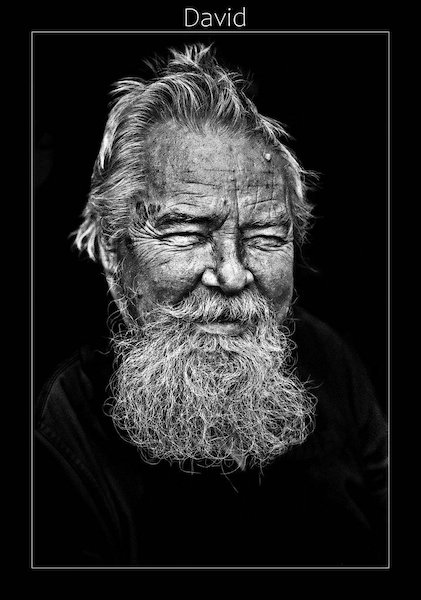
Capturing Humanity: Crombie McNeill’s Portraits of the Homeless
July 19, 2023
When Canadian photographer Crombie McNeill first started his career in photojournalism in the early 1960s, a peer suggested that he visit the Union Mission and take some portraits of the homeless people there in order to build his portfolio. Based in Ottawa, Canada, for the entirety of his career, McNeill entered the Union Mission skeptical that anyone would allow him...
More »
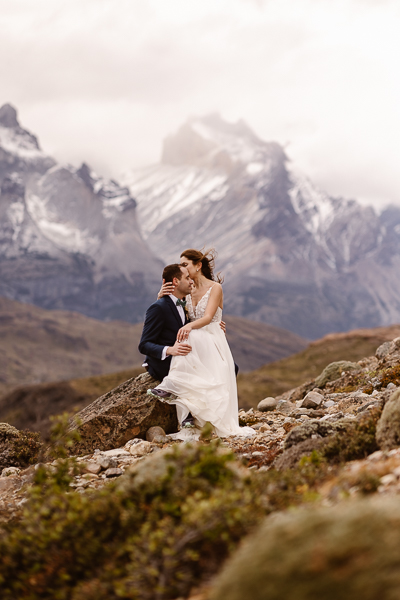
From the Rockies to Patagonia: Elopements that Go the Extra Mile
June 28, 2023
With the eye of an eagle, the endurance of a mountain goat, and the joy of a wildflower in the breeze, Chilean-born Andrea Enger was destined to become a photographer of adventure elopements. She has overcome her share of challenges as both a Latina woman and immigrant, pioneering into photography with her heart set on a life of creativity. Now...
More »
Robyn Lindemann Finds the Light in her Darkening World
February 27, 2023
Robyn Lindemann had to give up her wedding business after being diagnosed with retinitis pigmentosa. Now she's traveling the world before she goes blind.
More »