Eye in the Sky
October 1, 2009
For more than 40 years, San Francisco photographer Barrie Rokeach has been a creative eye in the sky, combining the skills of an accomplished pilot with the discerning vision of a trained observer and the instinctive timing of a sports photographer. The result is a vast portfolio of stunning images ranging from documentary-style photographs of industry and commerce to evocative, moody abstracts of man-made structures such as freeways or nature’s own creations, meandering rivers or majestic mountains dramatized by the interplay of light, shadow and design.
While today he is recognized as one of the most accomplished and prolific aerial photographers in the country, Barrie Rokeach’s initial aviation experience was more grounded—literally. Still in high school, he got a job refueling aircraft at Long Beach airport in Southern California, eventually going aloft by taking flying lessons from his employer, the now long-gone Air Oasis. At about the same time he took an interest in photography but, as with his refueling job, his photography endeavors were from ground level. It was some years later that he combined his two skills, a career move that has paid dividends personally and professionally.
The personal satisfaction of creating great photographs has its own rewards but does not necessarily pay the bills. Making a profitable living demands business acumen in a wide range of disciplines including recognizing potential markets for your work. And as Barrie’s portfolio of aerial images indicates, there’s a huge range of subject matter to be shot from above and a correspondingly large array of potential outlets for aerial photography—if you know what you’re doing.
During his career Barrie has photographed aerial assignments for innumerable international corporations and, as one would expect, the subject matter has included major projects such as real estate developments, construction, bridges, freeways, buildings—think of an industry that lends itself to aerial photography and Barrie has probably photographed it. Perhaps surprising, however, is the broad range of commercial applications for his aerial photography. In his acclaimed book, Kodak Guide to Aerial Photography (Kodak, 1996), Barrie points out that he has photographed on assignment, or licensed stock images, for such diverse uses as: book covers, annual reports, corporate publications, consumer and trade advertising, textbooks, trade books, AV presentations, calendars, postcards, posters, murals, apparel, DVDs, CDs, and as elements in computer-enhanced illustrations. And that’s just a partial list. [Author’s note: Kodak Guide to Aerial Photography is now out of print but can be obtained direct from Barrie Rokeach at www.rokeachphoto.com.]
Portraying the essential visual elements of an environment while piloting a plane is challenging, but through Barrie’s lenses we see intricate patchwork quilts, which in reality are fields of crops. Iconic structures such as the Empire State Building, the Golden Gate Bridge, and the Transamerica Building are dramatically portrayed from different angles and bathed in a variety of light. Intricate geological patterns are beautifully and powerfully lighted to enhance hues, texture, shape and form. More delicate, peaceful scenes of golf courses and sand dunes, coastlines and bays contrast with the ominous, threatening San Adreas Fault, whose jagged lines and rocky edges erupt in a classic example of nature’s force and artistry.
The technical aspects of aerial photography are complex, especially if the pilot is also the photographer. Most practitioners, Barrie Rokeach included, would not advise trying to photograph while piloting. Aviation and aerial photography are inherently dangerous and accidents happen. “Too many pilots have ‘bought the farm’ when they tried to do both activities,” said Barrie. “I was too dumb to know any better when I began, and managed to acquire the necessary skills, without killing myself, to pay attention to the airplane while simultaneously looking through the viewfinder.” While he prefers to be both pilot and photographer—“Since I can exert the maximum control as both,”—he will occasionally take a pilot with him to keep watch for other aircraft in busy airspace, but not to fly the plane. “When a helicopter is required for a job I am happy to let someone else fly, though I watch them carefully to make sure they don’t take chances I wouldn’t take myself,” he says.
Peter Skinner: Do you have a favorite aircraft to fly and photograph from? And do you own a plane?
Barrie Rokeach: In general, I prefer a high-wing aircraft with an open window—to avoid shooting through Plexiglas—although helicopters do have advantages. My favorite plane is the lowly Cessna 150 or its newer sibling the 152, which are basically the same aircraft. Though not good for long cross-country trips because it is too small, slow and uncomfortable, those first two attributes are exactly why I love it: You can really kick it around in the air, make it do just about anything, and it comes right back for more. It is a very forgiving, flexible aircraft. If they made one with retractable landing gear and sans wing struts, I’d love it even more.
I used to own a Cessna 182. I loved it and flew it everywhere around the country. I remind my wife that I traded it for her shortly before we got married. I longingly look at the plane’s old propeller blade sitting in my office, when the urge (to own a plane) occasionally returns. It reminds me of the good old days, as well as the outrageous expenses of owning an aircraft.
PS: What’s your shooting modus operandi?
BR: I’ve never used a camera mount in an aircraft, preferring to handhold. I appreciate the quick, split-second compositional changes afforded by handholding. I fly the aircraft into position, release the controls and grab the camera sitting in my lap. I usually have plenty of time to make exposures before the aircraft requires corrective maneuvers.
PS: Regarding equipment and medium—what do you use these days?
BR: I made the changeover to digital about four or five years ago. I don’t use film anymore, but reminisce about the good old days of shorter-than-150-page camera manuals. I still use a wide array of camera bodies, lenses from wide angle to telephoto, filters, gyrostabilizers and various other pieces of equipment. Digital has simplified some aspects of photography—and made others infuriatingly complex—but I still believe in getting the shot right in the first place. Though postproduction can help correct problematic shots in some scenarios, I prefer to stay ahead of the curve by recording on the sensor the best possible image.
PS: Flying is not cheap so your pre-flight planning and equipment checking must be very thorough? It’s not as if you can walk back to your car and grab an extra lens or filter.
BR: I would imagine most professional photographers have a game plan for every assignment, no matter how complex or expensive. And I do as well, every single time I go up. When I fly, I plan carefully beforehand, then work diligently to get the shot, and it usually requires solving some problem on-the-fly (so to speak)—technical, compositional, lighting or some other unforeseen difficulty. However, I also work hard to stay open to new possibilities, new ways of seeing and interpreting the subject. I believe strongly in serendipity, and I work hard to make the serendipitous happen.
PS: How difficult is it to compose and frame a subject while making sure the subject is lighted as you want it while moving at about 150mph?
BR: I began photography with an ancient 4 x 5 camera, then, after years of practice, advanced to an even older 8 x 10. I’d dance around the subject for hours, observing subtle changes in light, composition, weather, framing, perspective, etc. My mind would play with all the potential combinations of factors until I made a decision, then I’d pull the film holder from the pack, gingerly load it into the camera to avoid disturbing its delicate balance, pull the shield from the holder and hold my breath while I gently squeezed the shutter release. You can’t do that while piloting an aircraft. In the air you have to make instantaneous decisions. By the time you even think to pull the trigger the shot is long gone, a few hundred yards to the stern. In as little as quarter of a second the light has changed, perhaps the subject has moved or the framing is all wrong. I had to learn an entirely new way of seeing, thinking and shooting in order to get what I want in the air. Now, I visualize and click simultaneously. By the time I ruminate about it, I’ve already taken the next shot.
PS: It sounds like sports photography—anticipating the peak of action?
BR: Yes, sports photography is similar to aerial photography and I’ve shot many sports from the ground and the air. The possible exception is that the tripod or monopod doesn’t usually move in sports photography.
PS: What’s you favorite time of day and light to make aerial photographs?
BR: The subject and purpose of the photograph always dictate details including lighting and time of day. And it is always most important to solve the client’s problems while providing the best image possible. However, I love the modeling and dimensionality of low light, either early morning or late afternoon. If the client’s use of the image affords a more dramatic rendition of the subject then I shoot accordingly. That’s not to say one can only get dramatic images at the extremes of the day—some of my portfolio images exhibited in galleries and museums were taken in the flat light of noon. It is just a different way to experience the earth and requires a different vision, sensitivity and interpretation.
I always keep my eyes open, literally and figuratively, on assignment. I always think of the bigger picture, other potential uses like the annual report cover, an ad, calendar and other possibilities. First, I get what they want, then I get what I think they might also want. Along the way I get what I want.
PS: In order to reduce costs to individual clients, do you piggyback assignments?
BR: I don’t piggyback different assignments or subjects as they all have their unique characteristics and demands of weather, time-of-day and other factors. But, I will encourage the assigning client to piggyback a project with another interested party if I feel the budget dictates additional resources. This can bring in a project at a lower cost, distributed across several clients, but still at a reasonable budget for me.
PS: Do you ever fly on self-assignments to add to your stock files?
BR: Although my work is with three agencies, I don’t shoot for stock anymore, only on assignment. The stock market has dug itself into the ground. Stock photography is a mere widget, a commodity, not a professionally crafted service, and as such is driven by the rules of economics-of-scale down to the bottom line—the cheaper, the better. Thus, I don’t fly as often as previously when stock was healthy and worthwhile. I’ve been busy lately with a number of assignments, and I fly in between to keep my skills current and cutting edge. I’m always working on personal projects as well, which gets me in the air regularly. I seem to be able to generate new ideas with ease, so there is always reason enough to fly.
PS: Given tighter security in airports generally, has access to airspace over certain areas such as major structures, government buildings, national parks and similar areas been restricted?
BR: Life in the air changed drastically after 9/11. The entire air space was dramatically affected by the severe restrictions. I know a few operators who went out of business in the aftermath. However, things have pretty much returned to normal. I don’t have to worry anymore about being chased away from the Golden Gate Bridge by a couple of F16 fighters. However, I always try to coordinate with air traffic control prior to any unusual flight. It’s better to keep others informed and reduce possible nervous tensions.
The National Park Service clamped down on over-flights prior to 9/11. Many national parks and similar protected areas now have severe restrictions on the airspace above, mostly to avoid noise and complaints. Flying in the U.S. was always a freewheeling activity—picture the nonchalant barnstorming of yesteryear—but it’s slowly changing. There are moves afoot to further restrict general aviation activity.
PS: Is there an outstanding image that, in your opinion, defines your aerial photography?
BR: I think one image that sums it all up for me is the cover photograph on my Kodak book—a Citabria appearing to land on the Golden Gate Bridge. This image was shot before the advent of manipulation software, and required split-second timing and coordination between the two aircrafts. On our first pass along the bridge, the pilot of the Citabria did not follow my instructions fully so we were not lined up appropriately. I made one exposure on the second pass to capture this dramatic image. I feel this image epitomizes my expertise as a pilot/photographer.
Aerial photography is not without its risks and Barrie has sage advice for any photographer undertaking an aerial assignment—if you have dependents, you need insurance. Make sure the pilot and his company have adequate insurance and you have your own coverage, including disability insurance.
Aerial photography is not for everyone but for those who want to try their hand at photographing the world around us from a unique perspective, the sky’s the limit!
To see more of Barrie Rokeach’s aerial photography and to inquire about Guide to Aerial Photography, (packed with valuable information on the A–Z of shooting from the air), go to www.rokeachphoto.com.
Peter Skinner has been a regular contributor to Rangefinder since 1981. An author and writer/photographer he is now based in Queensland, Australia, after living and working for more than 23 years in the United States. He can be reached at [email protected].
Related Articles
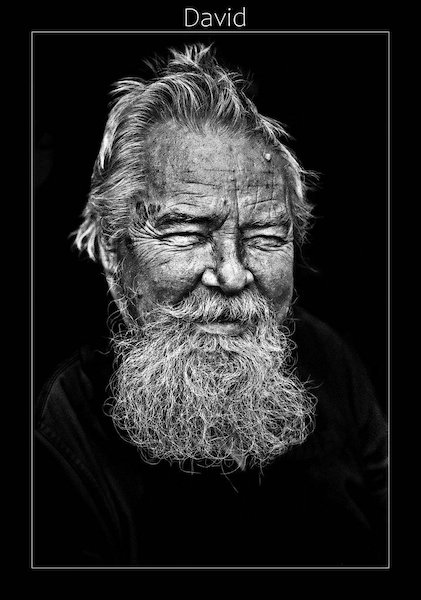
Capturing Humanity: Crombie McNeill’s Portraits of the Homeless
July 19, 2023
When Canadian photographer Crombie McNeill first started his career in photojournalism in the early 1960s, a peer suggested that he visit the Union Mission and take some portraits of the homeless people there in order to build his portfolio. Based in Ottawa, Canada, for the entirety of his career, McNeill entered the Union Mission skeptical that anyone would allow him...
More »
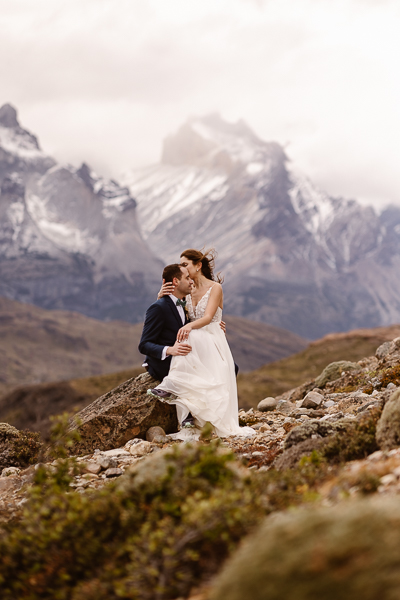
From the Rockies to Patagonia: Elopements that Go the Extra Mile
June 28, 2023
With the eye of an eagle, the endurance of a mountain goat, and the joy of a wildflower in the breeze, Chilean-born Andrea Enger was destined to become a photographer of adventure elopements. She has overcome her share of challenges as both a Latina woman and immigrant, pioneering into photography with her heart set on a life of creativity. Now...
More »
Robyn Lindemann Finds the Light in her Darkening World
February 27, 2023
Robyn Lindemann had to give up her wedding business after being diagnosed with retinitis pigmentosa. Now she's traveling the world before she goes blind.
More »