Everyone’s Seen His Pictures
May 1, 2009
I’m sure there are many crusty old (as in retired) magazine photographers who can say they really enjoyed the variety of assignments they had during their careers. It’s pretty safe to say though that few have led such a glamorous and varied photographic career as Bob D’Olivo.
Who? His name is certainly not a household name, as he was a staff photographer rather than a freelancer. That’s because Bob worked almost his whole career for one niche magazine publisher. Luckily for him it was Petersen Publishing, which, over the course of almost half a century, published a wide array of enthusiast magazines in several genres, including, of course, Petersen’s Photographic.
Any car enthusiast will know that Robert E. “Pete” Petersen was the person who founded the publishing company that bore his name when he started Hot Rod in 1948 and Motor Trend in 1949. Both these magazines are still going strong although the company has been through a handful of different owners since Petersen sold his publishing company in 1996. Incidentally, Petersen passed away in 2007 at the age of 80. His legacy is such that many people still refer to the magazines as Petersen magazines. (Coincidentally, Bill Hurter, editor of Rangefinder, was editor of Petersen’s Photographic for many years.)
As a sports car and camera enthusiast living in New York State in the early 1950s, it was no surprise that Bob D’Olivo dreamed of working as a car photographer at Petersen Publishing in California. After all, it was where the hot rod craze had started right after the Second World War and it was sunny, so there were plenty of opportunities to drive convertibles with the top down.
But Bob was working in the Speed Graphic repair department at Graflex in Rochester, NY. He had married in 1949 and his wife worked nearby at Kodak. Bob had been a Navy aerial photographer in Florida near the end of World War II—obviously a much more pleasant posting than most servicemen had enjoyed. No doubt he had gotten into that situation because he had a passion for the photography business. The photo bug had hit him when he was all of 9 years old. “I couldn’t believe that a camera could accurately record images so I bought one that cost 25 cents with a cereal box top,” Bob reminisces. “I worked so hard from then on to transfer what I envisioned onto film.”
In 1951 Bob and his wife made the big move out to California. Armed with examples of midget and sports car races he had photographed in New York, he headed straight to the Petersen offices in Hollywood and asked for a job. There were none, but just six months later he got the call and started working in the darkroom and doing some shoots at Petersen Publishing.
At that time (1952) there were three photographers working for the Petersen magazines. Fast-forward to 1996 when Bob retired and there were 15 employees working in the photography department that Bob had been in charge of for over 40 years. During those four decades Bob shot cars, motorcycles, boats, races, movie stars, guns and animals.
Guns & Ammo was founded in 1958 and was one of Petersen’s favorite magazines. In the following years, as part of his job, Bob went on six safaris in Africa with each one lasting 30 days. He even shot some movie footage as well as stills.
In many ways it was Bob’s work for Guns & Ammo that ended up being his specialty. That specialty? Shooting bullets, or more accurately, high speed photography—Bob had the knack for freezing speeding bullets without the benefit of today’s electronic timers and sensors. Yes, he had the use of high speed Edgerton flash equipment.
One assignment for SOG Knives was to show a bullet being split in half by a knife. It only took him seven tries to get it. A modified version of that picture is still being used in the 2008 SOG Knives catalog.
Bob’s toughest assignment? It was decided that the cover for the 30th anniversary issue of Guns & Ammo should be a photo of a bullet going through a bottle of champagne. “I thought it’d be a cinch,” says Bob. “But it was the most frustrating shoot ever. The timing of the bullet exiting the bottle was okay but foam created by the champagne was obscuring the bullet image. It took three days and three cases of champagne to get the shot. Thank goodness Petersen owned Scandia restaurant.”
Bob’s most outstanding assignment? In 1992 he had the opportunity to photograph President Ronald Reagan at his ranch in Santa Barbara, CA. He spent 21/2 hours with Reagan, including a tour inside the home. According to Reagan’s security, not even Defense Secretary Casper Weinberger was allowed that privilege. “I’ve photographed lots of famous people but being with Reagan was magical.” It was the second time Bob had photographed Ronald Reagan, as he did a photo shoot with him in 1955—just one of many movie stars he photographed in and around Hollywood.
On the whole though, Bob says he never enjoyed photographing people as much as things. He really liked driving, which was just as well as most of his career was spent photographing cars in studios, on location and at racetracks on as well as off-road. (It was in the dust in Baja that this author first met Bob in the mid 1970s.)
Apart from photography for the Petersen magazines, Bob and his crew also undertook commercial photography assignments for many major car companies, supplying them with PR photos for use in the media. If you’ve ever seen a photo of a Corvette from the 70s in a magazine or newspaper, chances are good that Bob took it. You’ll find no photo credits on those photos, though.
Bob says he always enjoyed a challenge and he made sure that his staff photographers were well rounded so that they could take on all types of photo shoots. “We could not afford to have staff photographers whose expertise was limited to one or two areas.”
Since his retirement Bob says he has not done a lot of shooting beyond photographing his grandkids at school sports. He left Petersen just as digital was starting and he has no regrets. He does not have a great opinion of digital photography: “as it appears today with computer manipulated photos with a photographer’s photo credit attached. Better the credit should read ‘imaging by…’ What drives a photographer to produce a great image is the challenge to create that image in-camera. If this challenge goes away, so will creative photographers.”
You certainly cannot argue with Bob’s view when you look at his stunning shot of a bullet passing through the champagne bottle—throughout his career he rose to the challenge of pure photography with no enhancing done after capture.
John Rettie is a photojournalist who resides in Santa Barbara, CA. Readers can contact him by email at [email protected].
Related Articles
Capturing Humanity: Crombie McNeill’s Portraits of the Homeless
July 19, 2023
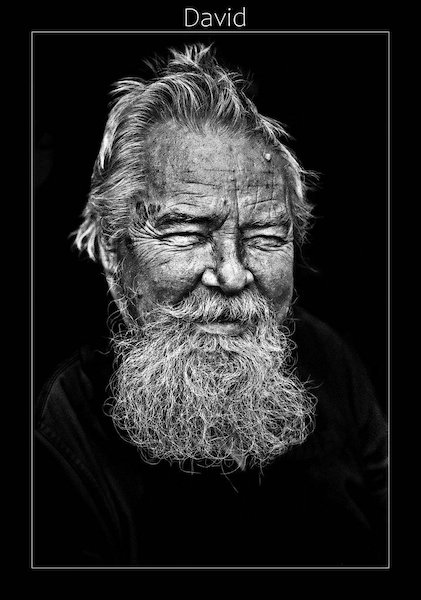
When Canadian photographer Crombie McNeill first started his career in photojournalism in the early 1960s, a peer suggested that he visit the Union Mission and take some portraits of the homeless people there in order to build his portfolio. Based in Ottawa, Canada, for the entirety of his career, McNeill entered the Union Mission skeptical that anyone would allow him...
More »
From the Rockies to Patagonia: Elopements that Go the Extra Mile
June 28, 2023
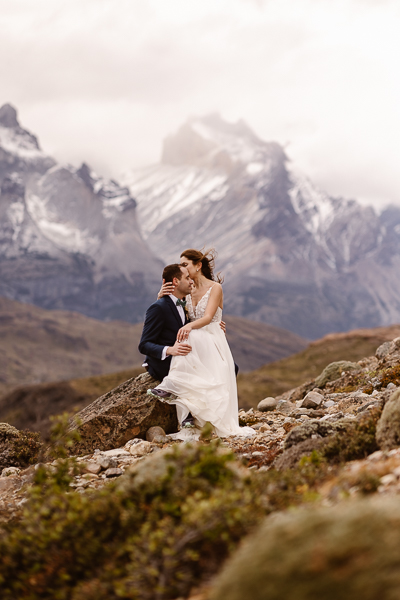
With the eye of an eagle, the endurance of a mountain goat, and the joy of a wildflower in the breeze, Chilean-born Andrea Enger was destined to become a photographer of adventure elopements. She has overcome her share of challenges as both a Latina woman and immigrant, pioneering into photography with her heart set on a life of creativity. Now...
More »
Robyn Lindemann Finds the Light in her Darkening World
February 27, 2023
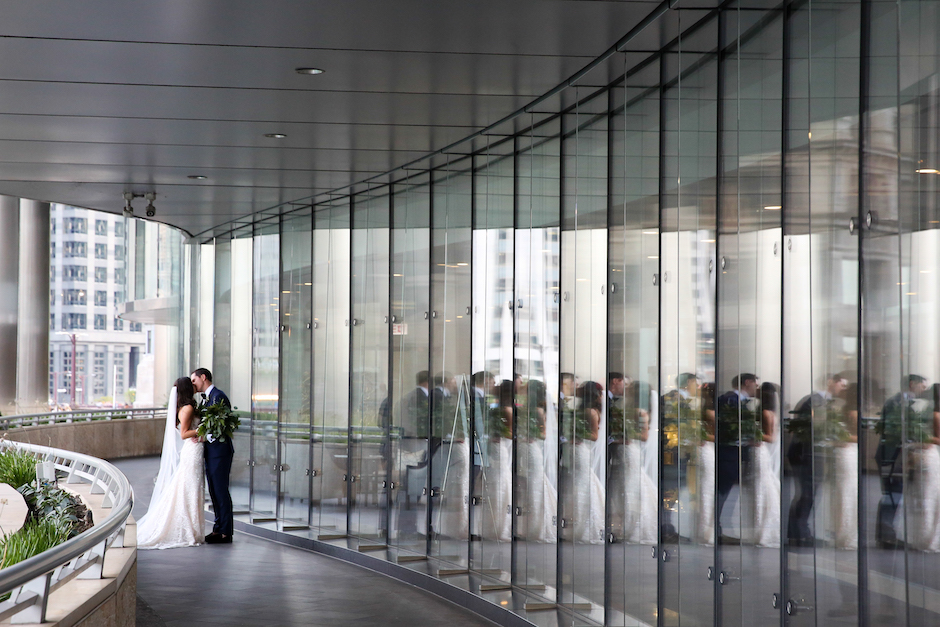
Robyn Lindemann had to give up her wedding business after being diagnosed with retinitis pigmentosa. Now she's traveling the world before she goes blind.
More »