
The Year in Tech: Better Software, Lower Prices and More
December 11, 2014
Every two years in Germany, the giant photo show Photokina takes place and photographers eagerly anticipate the announcement of new cameras. There have been plenty of developments and innovations that have made the past two decades a period of giant upheaval as the industry switched from film to digital.
However, as I write this column on the year in technology, I’m hard-pressed to name any single new product that moved the needle, at least for me. Of course, other pro photographers might disagree, and it’s certainly not to say there have not been any new product introductions in the past year worth looking into.
FULL FRAME DSLRs (THAT COST LESS)
One of the most significant new cameras was announced at the beginning of the year and is now widely available. Although I have not yet been able to shoot with one, I think it’s fair to say that the medium-format 51-megapixel Pentax 645Z DSLR, with a reasonable price of $8,500 for the body, is a camera worthy of consideration for wedding and portrait photographers. The high cost of similar medium-format cameras from Hasselblad, Mamiya Leaf, Phase One and others in the past has relegated medium format to commercial photographers with big shooting budgets. The 645Z could change that.
Because less-costly full-frame DSLR cameras have become widely available in the past couple of years, this is the area that has seen the most new products for Rangefinder readers. Many of you have probably made the transition from cameras with APS-C sensors to the bigger full-frame sensors, which lead to better quality, especially in low light for any given number of pixels. Nikon definitely lead the way in 2014 with three new full-frame bodies: the D4S, D810 and most recently the D750. Canon’s only new pro-level DSLR in 2014 was the 7D Mark II with an APS-C sensor.
MIRRORLESS CAMERAS GET EVEN BETTER
Most action in 2014 happened in the mirrorless market. There were new entries from Olympus, Sony, Fujifilm, Samsung, Leica and others. Many pro photographers are adding a mirrorless camera to their kit as the lighter weight and compact size makes it easier to carry a camera at all times and is less obtrusive than a traditional DSLR. Since many of these cameras use the same APS-C or four-thirds sensor found in a DSLR, the image quality is now on par with that from an equivalent DSLR.

Mirrorless cameras are gaining in popularity and the Panasonic Lumix DMC-GH4 is one of the standouts, especially for those shooting 4K video.
Aside from the electronic viewfinder, which not everyone likes, the advantages of a mirrorless camera are quickly outweighing the disadvantages for most photographers. Samsung’s new NX1 camera is one to keep an eye on, as it offers several new features. We plan to review it soon.
SMARTPHONES UPPING THE COMPACT GAME
With the quality of smartphones getting better every quarter, it’s easy to see why the market for compact point-and-shoots has all but evaporated. While there are always cynics, I’ll bet every reader of this magazine uses a smartphone and takes plenty of pictures with it. In fact, the quality is often better than that obtained by a “real” camera, as the software is so much better on a smartphone—and that is a major component in creating a good photo.

Apple’s latest iPhone 6 Plus moves the needle as a camera with optical stabilization and more manual controls for photographers.
As an example of the progress that’s being made, the newest iPhone 6 Plus has an optical image stabilization system mimicking that found in DSLRs. The camera—sorry, phone—can also shoot video at 240 fps, further enhancing the slow-motion capabilities of the previous models. And, yes you can get a simplified version of Photoshop that runs on the iPhone. Adobe says it is committed to continually enhancing its creative programs so they will work on smartphones and tablets.
If it sounds far-fetched, it’s worth remembering that today’s smartphones are more powerful than desktop computers were a decade ago, so running a program such as Photoshop isn’t too difficult.
4K VIDEO: GOOD ENOUGH FOR STILLS
If developments in still photography have reached a plateau, that’s not true in videography. Since 3D failed in its fourth attempt at becoming a mainstream product, both Hollywood and TV manufacturers have high hopes that 4K will be the next big thing. Thanks to the amazing power of modern electronics, it’s now possible for small cameras to produce 4K footage. Again, it’s not the major players that are leading the way, but rather the newcomers, such as GoPro, which has introduced the Hero4, that can shoot in 4K.
However, Panasonic has probably made the biggest splash this year with its mirrorless Lumix DMC-GH4 camera that can also capture high-quality 4K footage. Because the camera only costs $1,700, it has caught on with filmmakers in much the same way the Canon 5D did with those shooting HD just a few years ago.
Some time ago, industry pundits predicted still cameras would disappear and we would all shoot video and then grab individual frames for use as still images; it’s becoming partially true, as good 4K video can provide decent 8-megapixel still images. Panasonic, for example, is promoting this feature in its new compact Lumix LX100 camera.
ADOBE SOFTWARE NEVER QUITS
Though there’s not a lot of room left for significant developments in the hardware end of our business, the same is not true of the software side, which still has plenty of room for ongoing improvement and functionality.
I recently attended the fascinating annual Adobe Max conference for professional users of Adobe products (some 4,000 creatives, including many photographers from around the world, attended the event in Los Angeles). Even though Adobe produces a wide array of programs that cover numerous genres of creativity, Photoshop still seems to be the favorite, judging by the response from the audience in the popular “Sneaks” event where Adobe engineers showcase potential new features in programs.

Adobe showed off a Defog Photoshop filter during Sneaks at the Adobe Max conference for creatives.
This year Adobe showed two things that might (read: probably will) appear in future versions of Photoshop. First was a Defog filter that automatically removes haze from a picture without affecting the quality of the underlying image. It can also add “fog” if one wants to create a dreamy look. The other new filter is a Time of Day filter that can change the lighting from broad daylight through dusk to night. Perhaps more significantly, Adobe showed off upcoming versions of Photoshop and other programs that can work on a tablet, allowing for editing in the field.
HACK & MAKE (AND WHAT’S IN STORE FOR THE FUTURE)
In my opinion, we have reached a point where traditional DSLRs are producing still images that are amazingly good, obviating the need to upgrade as often as we have in the past. In reality, there is not a tremendous amount camera manufacturers can do to improve still image quality.
However there is a lot that can be done to improve workflow for pro photographers. I dream of the day when a major camera manufacturer works with a company such as Apple to produce a hybrid DSLR. Think about how great it would be if your iPhone could be used as the interface for your camera body with its larger sensor and extensive range of interchangeable lenses. You would have dozens of apps that could be downloaded to work with your camera/smartphone combo. I realize that there are already apps that can do some limited things such as remote firing, but full customization will only happen if the camera manufacturers fully open up access to the electronic guts of a camera so third-party engineers can develop apps to enhance the experience of using a real camera.
Although it did not make the headlines, Olympus showed a prototype Micro Four Thirds camera at Photokina. It was not much more than a small box, but it’s part of a new initiative by Olympus called the Open Project Camera, or OPC Hack & Make. As described on the project’s website, Olympus is opening up access to the camera’s electronics and encouraging developers to create software to enhance the camera’s capabilities.

Olympus’ OPC open source initiative was one of the most promising announcements made in 2014 as it allows third-party engineers to develop enhancements on the software side of a camera.
It’s truly an encouraging sign that perhaps the conservative, not-invented-here attitude of Japanese camera manufacturers will change; it will have to if they want to stay in business, already having lost the amateur compact camera market. Imagine if Apple decided to produce a camera with interchangeable lenses; with the company’s expertise in software, it would be game over for the traditional camera manufacturers. In the meantime, it will be wonderful if the Olympus OPC initiative paves the way for bigger competitors to do the same.
Related Links
Photokina Recap: 4K, Blazing Fast Cameras and More!
The Totable Mirrorless Compact System Cameras
The Video Cameras to Crave and Covet
Related Articles
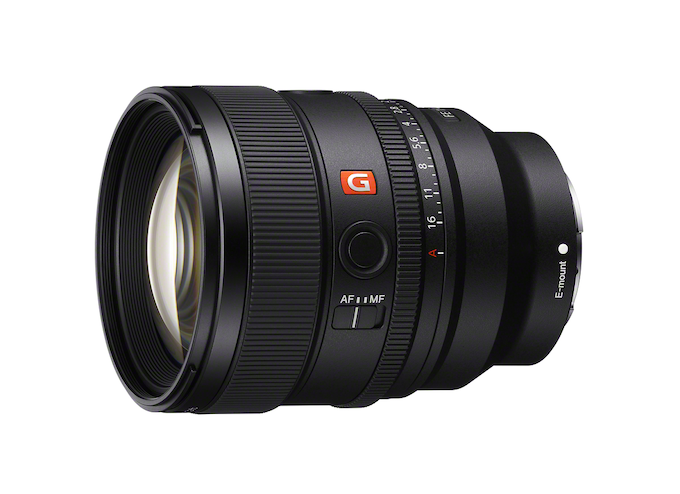
Sony’s Nex-Gen FE 85mm f/1.4 G Master II Prime Lens
September 24, 2024
For many photographers, a fast, 85mm prime lens is a dream lens. It’s perfect for a variety of portrait styles and can produce the dreamy bokeh that is the hallmark of large aperture glass. The latest 85mm prime on the market is the second generation Sony 85mm f/1.4 G-Master II. The original was introduced eight years ago, to meet (or...
More »
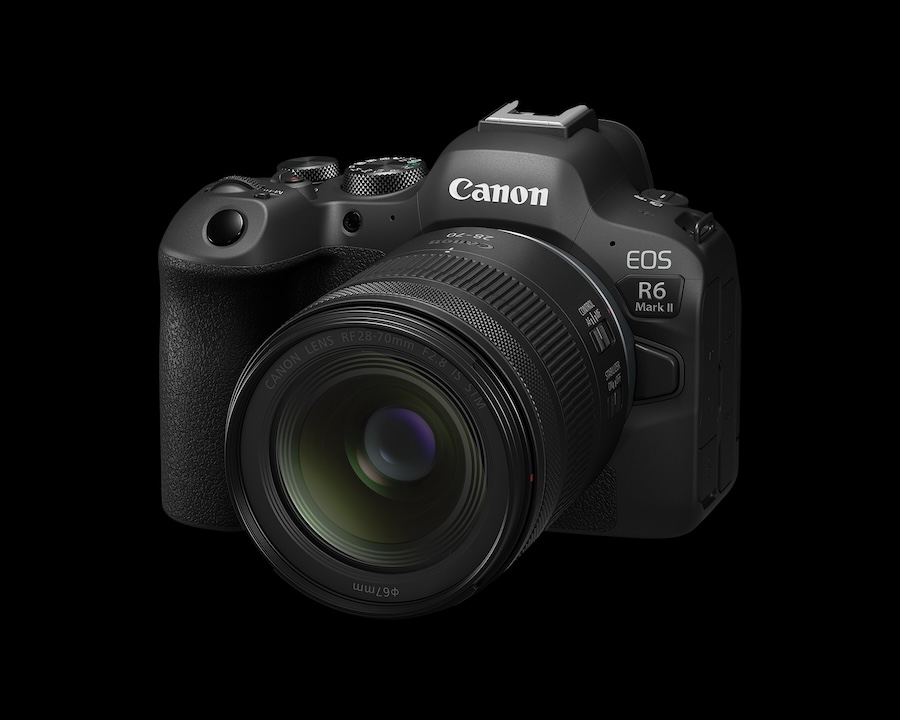
Canon Announces New RF28-70mm f/2.8 Zoom Lens
September 19, 2024
Canon released a new standard zoom with its RF28-70mm f/2.8 IS STM lens. This lens provides a versatile focal range similar to the RF24-70mm f/2.8 L USM lens but at less than half the price: $1,099 vs. $2,499. Granted the L designation of the older lens is, at least partly, responsible for the price difference but the new 28-70mm will...
More »

Canon Launches Two Pro-Level Cameras
July 18, 2024
Canon has officially launched two new, pro-level R-series mirrorless cameras: the 24-megapixel EOS R1 with its high speed performance and the 45-megapixel, high resolution EOS R5 Mark II. Not surprisingly, the R1 with its 40fps burst shooting will appeal to sports photographers and photojournalists—hence its built-in Wi-Fi and Ethernet. Of course, we expect to see this camera in action at...
More »