Lighting
Hands-On Review: Spiffy Gear’s Clever, Transformable LED Light
December 19, 2018
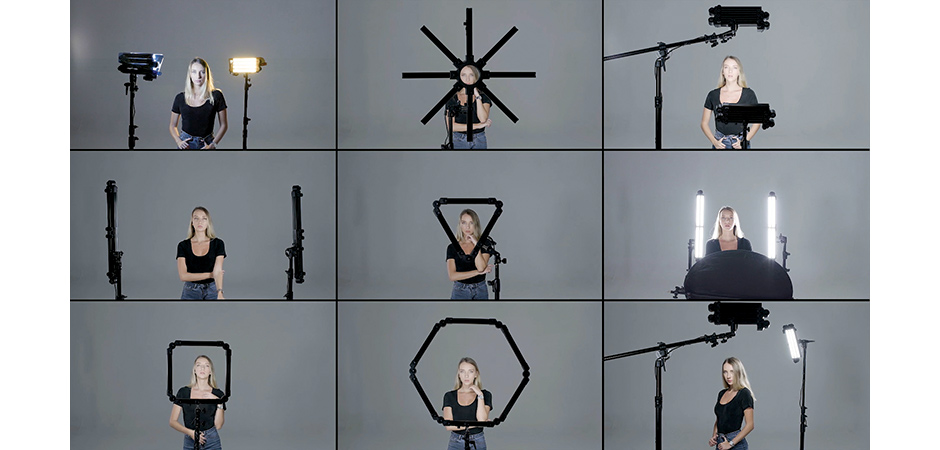
Reminiscent of Tinker Toys, Spekular’s modular lighting system comprises several daylight-balanced LED light strips and connectors so you can create a variety of shapes—from triangles and squares to light panels—out of the Spekular components.
This design-your-own-light-configuration set is available in several different bundles including the Core Kit ($650) and Expansion Kit ($130)—both of which I used in this review. The former includes four LED strips, four hinged connectors, a ¼-20 mount, power supply, eight gel holders and a carry case. The Expansion Kit adds two ¼-20 mount adapters, two section-to-section extension cords and two straight connectors. The latter is an essential component for getting the most out of the Spekular lights because it allows you to mount three lights separately (more on that later). But you can save yourself $100 and buy the Interview Kit for $680 and get the same Core and Expansion Kit components in one bundle. If you shoot on location without power, you may want to pick up the battery adapter as well ($130).
Design and Setup
Given the LED strips’ compact size and light weight, as well as the sturdy and convenient carry case, these lights are highly portable. Each LED light strip measures 1.57 x 11.8 inches and the total weight of all four is a mere 2.86 pounds. Spiffy Gear lists power at 14.5W per section (58W for the kit) and brightness at 1500 luminous flux per section (6000 for the kit)—so there’s plenty of light for most small shoots such as portraits and product assignments, as well as video productions.
The LED strips are well constructed and, thanks to their built-in diffusion cover, produce a lovely, soft light that’s daylight- balanced with a CRI of 94+. I found that color was consistent, even when the lights were powered on over long periods of time (an hour or more). The Core Kit comes with gel clips if you want even softer output or want to add a color or CTO gel.
Setup is quite easy. Add the ¼-20 mount adaptor to one of the strips, then insert each end of the LED strip into an adjustable, heavy-duty plastic connector (each connector can accommodate two LED strips at an angle). All but one light slid into the connector easily, and the stubborn one only required a little adjustment to lock it in place.
It’s easy to configure the Spekular into a square, triangle, light panel or other shapes. Plug the power adaptor into the “master” LED, turn it on and you’re good to go. Since all the light strips need to be connected to the master to get power, you’ll need the Extension Kit to set up separate configurations. But you can still get some cool setups with the Core Kit and a single light stand.
Output can be adjusted from 10 to 100 percent but only on the master, so all the lights will be at the same power level simultaneously. But from the brief video clips I shot, there seems to be no flicker at all.
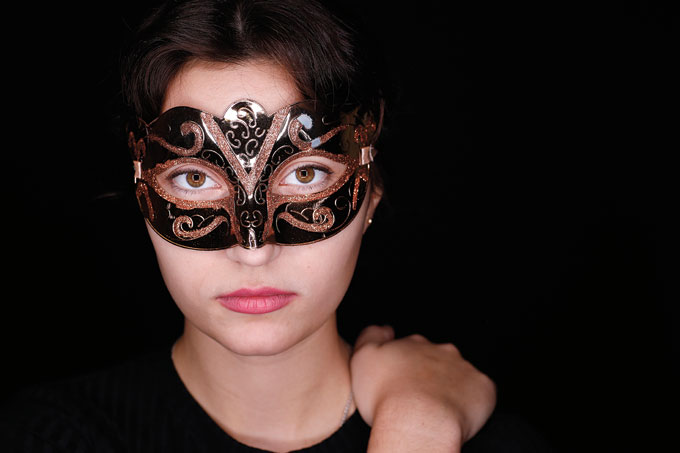
With the Spekular system, you can create interesting catchlights, such as these square reflections in the model’s eyes, using the four LEDs in the Core Kit. Photo © Theano Nikitas
What We Liked
I have to admit that the Spekular lights are fun to use, but they’re also versatile and can spark creativity by allowing you to configure unique lighting scenarios. Perhaps more importantly, they are extremely useful for a wide variety of conditions, and it’s a great kit to use as a singular lighting system (to create a ring light, for example) or to complement a larger lighting setup. I can easily see videographers—and still photographers—using these lights when space is tight and they need to add a small swath of light in an out-of-the-way spot.
Color consistency was good and the light produced flattering skin tones. Although I was surprised that the light strips were warm to the touch after prolonged, continuous use, they did not generate enough heat to affect portrait subjects.
What We Didn’t Like
It was a little frustrating not to be able to control the output of each individual LED strip, especially when positioning the lights separately via the Expansion Kit. Whatever power level you set on the master LED strip is what you’ll get with the others. And I worry that the plastic corner connectors won’t stand up to heavy use over the life of the LEDs.
The Bottom Line
Yes, the kits and accessories are a little pricey and may be out of some people’s budgets, but this clever lighting system is convenient to use, travels easily and gives photographers and videographers the tools to think outside of the box when it comes to lighting. Be sure to pick up the Interview Kit bundle for the most useful and cost-effective purchase.
I really like using these lights, especially since my home studio is pretty tiny. The Core Kit, in conjunction with the Expansion Kit, allows me to easily set up lights in almost endless arrays in very tight spaces.
Related: Heads Up: Where Photo Gear is Going Next Year
Can You Use An LED Light for Flash Photography?
Three Ways to Remix the Usual Portrait Lighting Setup
6 Portrait Photographers Share Their Biggest Lighting Challenges
Related Articles
The Hobolite Micro—Perfection in a Pint-Sized Package
September 26, 2023
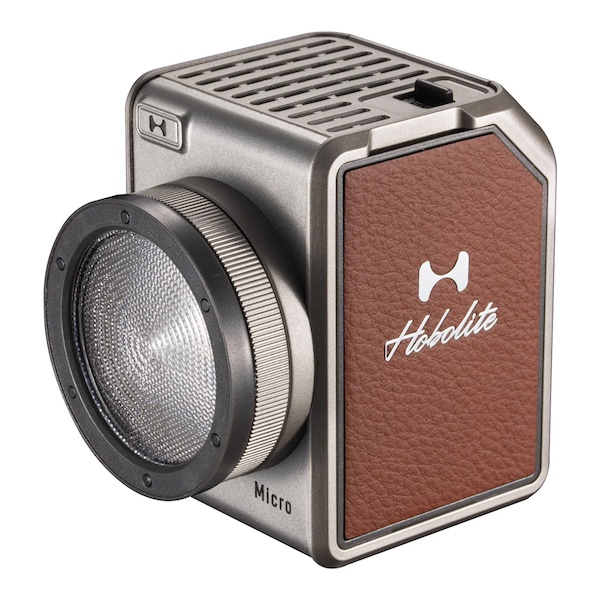
Form and function are perfectly matched with Hobolite’s latest release, the Hobolite Micro. This diminutive, bi-color, battery-powered LED light takes some of its cues from the company’s larger, more powerful siblings but doesn’t skimp on features. Yet it’s small enough to fit in the palm of your hand—or anywhere other lights are too bulky to fit, a special bonus for...
More »
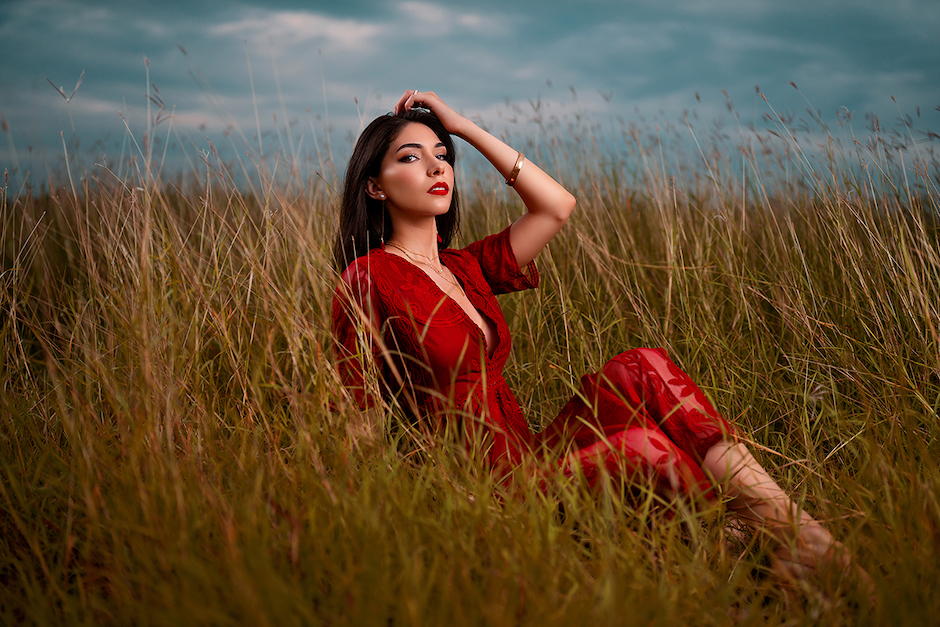
How Francisco Joel Hernandez Adds Depth to His Portraits
March 6, 2023
WPPI 2023 speaker Francisco Joel Hernandez has been a fan of off camera flash for over a decade and loves sharing his process on social media.
More »
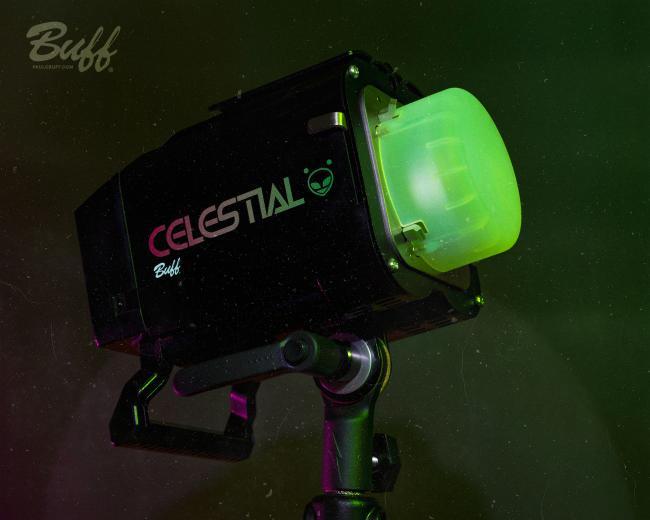
Paul C. Buff’s Celestial is a Powerful Battery-Powered Strobe
January 5, 2023
Lighting Company Paul C. Buff is best known for its studio lights—such as the Alien Bees and Einstein—but the company’s latest strobe is entirely battery powered. Arriving on Jan. 20, the Celestial is a battery-powered flash with up to 500 Ws of power and features like High Speed Sync. The Celestial: Battery Power Paul C. Buff’s Celestial delivers up to...
More »