
A Documentarian
March 1, 2011
A year before I met Tony O’Brien, I saw an exhibition of his work in the moving images department at the Santa Fe University of Art & Design (formerly the College of Santa Fe). The color photographs were taken during the Persian Gulf War when Tony was on a six-month assignment for Life magazine. Like all documentary photographers who have covered combat, Tony’s photographs accomplished their purpose, exposing us to the realities of war.
Tony grew up in New York City. His parents had a great appreciation of art, but were more of a snapshot-type household when it came to taking pictures.
He remembers sitting at his grandmother’s kitchen window watching the city street life unfold beneath him. He was always conjuring up imaginative stories. He remembers when his father bought his first real camera, a Canon rangefinder model with three interchangeable lenses. He says, “I had never held anything like that in my hands before. It had substance.” As a young boy Tony was greatly influenced by pictorial magazines. He comments, “National Geographic was to be handled with utmost care; a book unto itself and a window on the world. Then there was Life magazine and Boy’s Life. It was the people that interested me, and the world around them.”
Tony moved to Santa Fe, NM, in 1968 where he attended the College of Santa Fe and graduated with a degree in literature. In his early 20s Tony was living in Florence, Italy, where he met an aspiring young photographer, Kurt Breedlove. Tony shares, “Kurt opened the world of photography to me while we toddled about the Tuscan countryside capturing photographs of the Italian landscapes and lifestyles. I knew practically nothing about photography. Had I known what it would take I probably would never have become a photographer. Ignorance is bliss. I was going to be a photographer. That was it.”
Tony is a self-taught photographer who has had encouraging mentors along the way. He says, “You can’t succeed without support. Usually the support came just at the right time, just when it seemed impossible to go forward and all the self-doubt churned up within.” He continues, “Carmine Ercolano, who ran the Time/Life photo lab, was one of these people. He helped me believe in myself and in my photography. Another person who has been very important to me is Abbot Philip, a monk at a small-secluded Benedictine monastery in Abiquiu, NM. He taught me the importance of mystery in a photograph. There have been so many friends who have assisted me along the path of life and photography.”
Tony has worked mainly in the fields of editorial, photojournalism and documentary photography. In 1972 he began photographing for a daily newspaper, the Santa Fe New Mexican. He recalls, “My first assignment for the New Mexican was to photograph the mayor at his office. I had no idea what to do. But fortunately, a window allowed good light into the room. I was saved as I had never used a flash before.” He helped launch the weekly Santa Fe Reporter, and went on to work for the Albuquerque Journal North.
Tony started doing assignments for Life magazine after he brought them a self-assigned project on drugs and prostitution that he photographed in Washington, D.C., and New York City. He went on to do numerous assignments for Life, among them, the Gulf War, a Mount Everest Expedition and the Afghanistan War. There were quieter stories such as photographing a small immigrant community in Texas when it was getting running water for the first time. Tony says, “A story that had the biggest impact on me was photographing the life of the monks at the Christ in the Desert Monastery in Abiquiu. It was a yearlong project shot in black and white. It gave me the opportunity to slow down and really see and understand the use of light much better.”
Tony says, “My photography hasn’t really changed much since the digital era began. I still use film, however, as a working full-time professional, analog is over. One must know digital photography. If you don’t, you will not find work. In many ways digital has allowed the photographer to be more involved in the whole process again, taking the picture, developing it, printing it, much like years ago when using film. One thing that is important is to download your digital images and edit them daily. You have to stay on top of it or else it will get away from you. I think digital photography has made making pictures fun again. It can be used as a wonderful teaching tool for the photographer, the ability to see your photograph immediately and making adjustments to the image.”
Tony began his career using a Pentax camera, then a Canon F-1, followed by a Leica rangefinder in the late 80s. He found that the Leica forced him to slow down and think more about the photograph. He has used a Hasselblad and large format cameras, but the vast majority of his work has been with 35mm cameras. Today he uses a classic Leica M6 and three lenses—35mm, 50mm and the 90mm—and a Canon Digital Rebel camera for his personal work.
Tony is dedicated to bringing photography to New Mexico. In the late 90s he ran the Santa Fe Picture Gallery with photographers Steve Northup, Polly Brown and William Clark. The small gallery was located upstairs in a historic stucco building near the Santa Fe Plaza. The monthly exhibitions had jam-packed opening nights and introduced many new photographers to Santa Fe. Each year an exhibition was devoted to young students of photography. During the annual Santa Fe Indian Market, award-winning Native American photographers were exhibited at Santa Fe Picture Gallery.
Tony’s photography has been exhibited at the of National Heritage Museum, Lexington, MA; the Southeast Museum of Photography, Daytona Beach, FL; the Adham Center of Photography, Cairo, Egypt; The Newseum, Rosslyn, VA, and the Sag Harbor Picture Gallery of New York. In 1990 he was awarded the first Eliot Porter Foundation Grant for his work in Afghanistan.
His clients include the Ford Foundation, the Pew Foundation, National Geographic Books, Time, The New York Times, Newsweek, Paris Match and German Geo. He is on the board of directors of the Santa Fe Center of Photography and leads workshops at Santa Fe Workshops. Tony completed color photography on location in Afghanistan for his children’s book, Afghan Dreams: Young Voices of Afghanistan (Bloomsbury, 2008). He resides in Santa Fe with his wife, Petra, and their three children. In Santa Fe Tony is represented by the Verve Gallery of Photography.
Paul Slaughter is a world-traveled photographer and writer residing in Santa Fe, NM. Paul specializes in location, stock, and fine art photography. An avid jazz lover, he has an extensive photographic collection of jazz legends. You can view portfolios of Paul’s work at www.slaughterphoto.com.
Related Articles
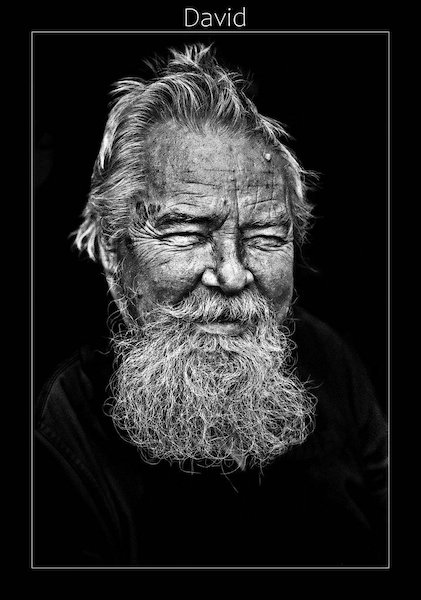
Capturing Humanity: Crombie McNeill’s Portraits of the Homeless
July 19, 2023
When Canadian photographer Crombie McNeill first started his career in photojournalism in the early 1960s, a peer suggested that he visit the Union Mission and take some portraits of the homeless people there in order to build his portfolio. Based in Ottawa, Canada, for the entirety of his career, McNeill entered the Union Mission skeptical that anyone would allow him...
More »
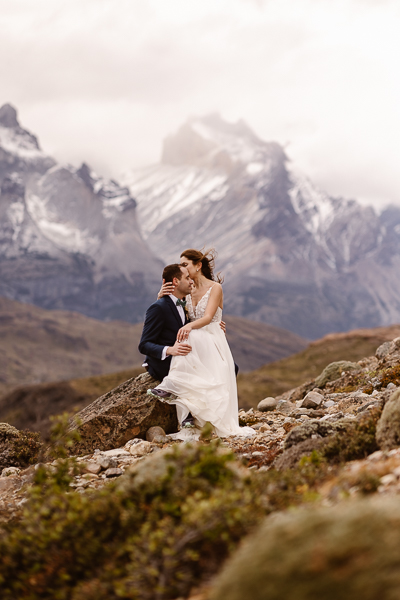
From the Rockies to Patagonia: Elopements that Go the Extra Mile
June 28, 2023
With the eye of an eagle, the endurance of a mountain goat, and the joy of a wildflower in the breeze, Chilean-born Andrea Enger was destined to become a photographer of adventure elopements. She has overcome her share of challenges as both a Latina woman and immigrant, pioneering into photography with her heart set on a life of creativity. Now...
More »
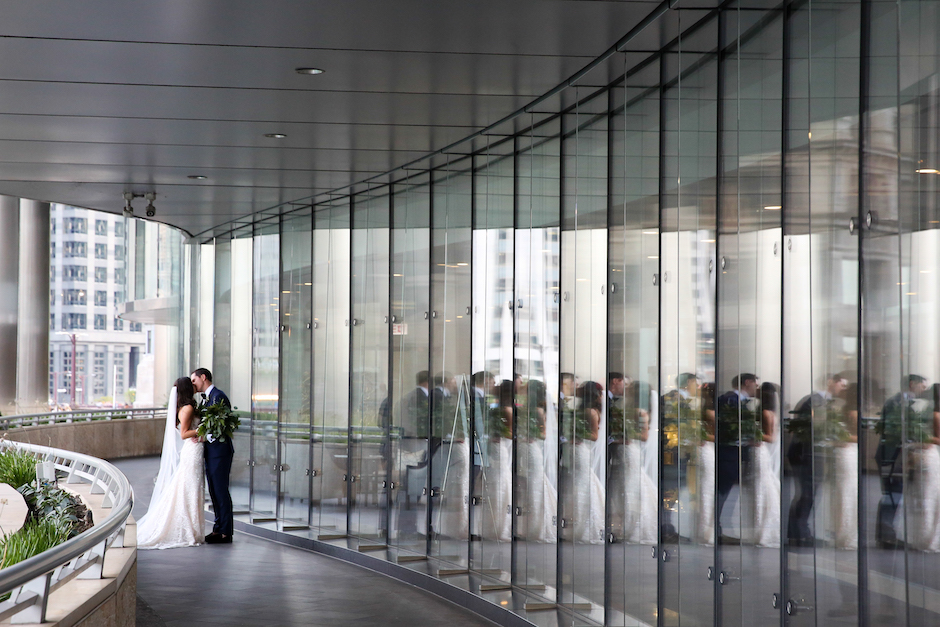
Robyn Lindemann Finds the Light in her Darkening World
February 27, 2023
Robyn Lindemann had to give up her wedding business after being diagnosed with retinitis pigmentosa. Now she's traveling the world before she goes blind.
More »