
Retro Modern
March 1, 2011
Tintype photography can be hazardous to one’s health. This is something Robert Benson knows all too well. “The last time I was making a lot of tintypes was in Alaska,” the San Diego-based photographer says. Outside Magazine had sent him to Fairbanks to make tintype images of ancient Paleolithic spear points for a story titled, “Meet the Flintstones” (it ran online in August 2007). For the assignment, Benson turned his hotel room into a studio and darkroom.
“After a couple hours of working in that bathroom with little or no ventilation,” he recalls. “I was nearly overcome by the fumes.” He thought he was on the verge of blacking out and was forced to step outside and get some fresh air. “I had a splitting headache for the rest of the day.”
Tintype, a photographic process dating back to the Civil War era has been making a small comeback in modern photography. These peculiar, virtually indestructible images are instantly recognizable for two distinct features: the flat, wafer-thin metal material that tintypes are made on, and for the unexpected, otherworldly quality of the finished images themselves.
The danger is in the chemistry. A handful of deadly, smelly and combustible compounds are necessary to the making of a tintype. The chemical list reads like a page from a bomb-making handbook: oil of lavender, ether, potassium cyanide, iron sulfate, and silver nitrate.
“I stained part of the bathroom sink and counter top with silver nitrate when I was in Alaska,” Benson says. “That stuff doesn’t wash off of any surface. The hotel charged me a cleaning fee of about $150.” It was due to the lingering effects of the silver nitrate that tintype was called the black art in its day. “Back then,” Benson says, “they say you could tell who the photographers were by their stained fingers.” Benson doesn’t wear gloves, even though he is ever mindful that if potassium cyanide were to seep into even the tiniest of finger cuts, the shoot would come to an abrupt—and ugly—end. “With gloves on,” he says, “you can’t hold on to the plates as easily.”
Tintype was an early version of the instant photo. Originally called melainotype and then ferrotype because of the iron (and not tin) plates that were originally used, a finished photograph could be made in less than an hour. Tintypes evolved from the ambrotype, a similar process in which a negative image was formed on a plate of glass rather than metal and viewed against a dark background. Tintype images are actually negatives as well; they appear as positives because the metal plates are first lacquered, painted or enameled black on one side.
But it was a concoction that saw use as a dressing for small wounds that made tintype and ambrotype possible in the first place. Highly flammable and sometimes explosive in its liquid form, collodion is a gluey mixture of nitrocellulose (also called gun cotton), ethyl ether and ethyl alcohol. Made light sensitive with the addition of silver nitrate, collodion photography was first introduced in 1848 in the United Kingdom by Frederick Scott Archer.
Archer never patented his idea. Instead, he published his findings in 1851 in The Chemist, and thereby launched what would become a revolution in imagemaking. Even though collodion photography would continue to be practiced around the world for almost a century after, Archer died penniless.
When Robert Benson first learned about tintype photography, he thought it might have a place in the kinds of editorial and sports photography that he specializes in. A two-time military photographer of the year (1998-1999) during his tour of duty as a photographer in the U.S. Navy, Benson favors Canon digital gear in his daily work for clients such as USA Today, Outdoor Life, Sports Illustrated, ESPN The Magazine, Boston Globe and Outside Magazine.
“I think art directors and photo editors are drawn to the uniqueness of the image. It’s not a clean image. It’s gritty and a bit dark, but still beautiful and edgy. No other photographic medium has the same look,” he says.
Indeed. Due to a variety of factors like length of exposure, subject motion, volatility of chemistry and subtle defects in the application of collodion tintypes are highly variable in appearance. At the extreme end of the scale tintype, images can look like something that survived a fire. Or tintypes can be sedate, detail-rich, nut-brown representations of the stoicism required of subjects during the typically minutes-long sittings. Collodion plates have an approximate ISO rating of one. Average exposures can therefore range from one to seven minutes, although other tintype photographers have reported exposures approaching 14 minutes.
“Someone once told me there is almost a haunting quality that arises as if a person’s soul is revealed a little when remaining motionless for several seconds, looking into the lens of the camera,” he says. Back in the day, photographers employed a cast iron appliance akin to a torture device called a neck brace to ensure that a subject could not move. It has been written that it was easier to not smile through a long exposure; hence the often stern visages of our great-great grand relatives in heirloom tintypes.
Benson uses a vintage Anthony 8 x 10 view camera. “It’s all wood construction. The film back was removed and replaced with a wet plate back made by C.C. Davis in Oregon. I started with Petzval barrel lenses made in the 1870s. They give a beautiful swirl bokeh and an authentic vintage look. With the camera and lens and bellows extension I can fill the frame with a person’s head, which is how I like to make portraits,” he says.
Benson learned tintyping through a workshop taught by California photographer Will Dunniway. He says there are no shortcuts in modern tintype. For the most part, tintypes are made today as they were over one hundred years ago. First, liquid collodion is applied by hand to a fresh plate. Then, in total darkness, the plate is immersed in a sensitizing bath of silver nitrate and various salts. Next, the plate is fitted into a light-tight wet plate holder, which in turn slips into the body of a specially modified large format view camera. That’s when the clock starts ticking. “If the plate dries out before you make the exposure, you’re out of luck,” he says.
Benson focuses the upside-down left-to-right-reversed image on a ground glass under a hood, then makes the exposure by removing the dark slide and the cameras lens cap, if there is one. He works outdoors in sunlight or in bright shade. He has entertained the notion of making tintypes indoors but says that to be successful, each strobe would need to put out more than 5000-watt-seconds. “That kind of a flash burst is going to be pretty jarring for the subject,” he says.
What does the future hold for Benson’s tintypes? “The plans are now to just continue making portraits. Tintypes, are a personal project of mine,” he says.
To see more of Robert Benson’s tintype images, visit his Web site at www.robertbenson.com.
Dave Good is a San Diego based head shot and lifestyle portrait photographer and freelance writer. Dave’s images can be seen at his Web site: www.davoodphotography.com.
Related Articles
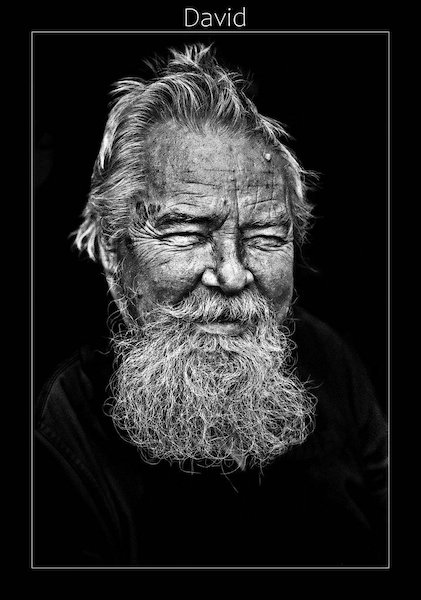
Capturing Humanity: Crombie McNeill’s Portraits of the Homeless
July 19, 2023
When Canadian photographer Crombie McNeill first started his career in photojournalism in the early 1960s, a peer suggested that he visit the Union Mission and take some portraits of the homeless people there in order to build his portfolio. Based in Ottawa, Canada, for the entirety of his career, McNeill entered the Union Mission skeptical that anyone would allow him...
More »
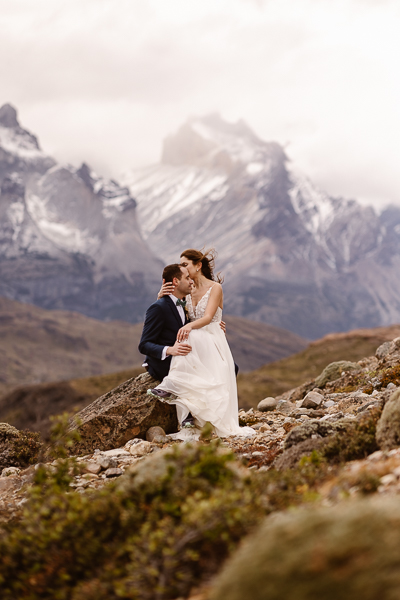
From the Rockies to Patagonia: Elopements that Go the Extra Mile
June 28, 2023
With the eye of an eagle, the endurance of a mountain goat, and the joy of a wildflower in the breeze, Chilean-born Andrea Enger was destined to become a photographer of adventure elopements. She has overcome her share of challenges as both a Latina woman and immigrant, pioneering into photography with her heart set on a life of creativity. Now...
More »
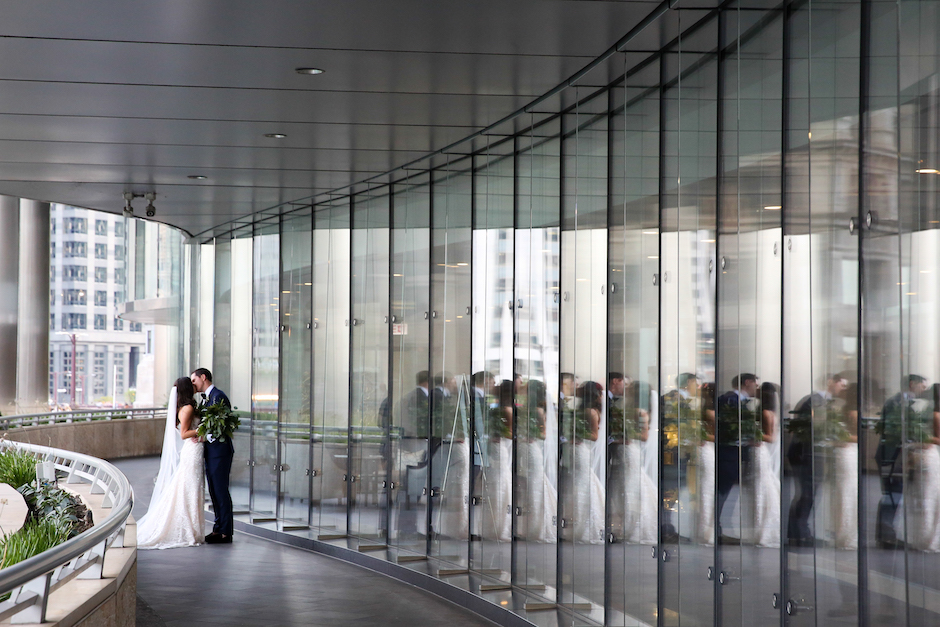
Robyn Lindemann Finds the Light in her Darkening World
February 27, 2023
Robyn Lindemann had to give up her wedding business after being diagnosed with retinitis pigmentosa. Now she's traveling the world before she goes blind.
More »