Light Reading: When the Picture is a Word
January 1, 2012
Photographs that feature written words prominently in the frame—a street sign, a bit of graffiti, posters, bumper stickers, that kind of thing—walk a fine line between art and laziness. At times they’re wildly inventive, but often, little more than failures of imagination, as if the photographer couldn’t articulate his or her message without including a built-in explanatory caption. Oddly enough, even the least subtle of these can be effective. One classic example: Margaret Bourke-White’s famous Depression-Era image of a bread line, 18 hapless people shuffling towards a shelter. Above them, across the entire upper half of the shot, looms a depressingly cheery billboard proclaiming, “There’s no way like the American Way…World’s Highest Standard of Living.”
Heavy-handed irony of this sort is a popular default theme in the words-in-pictures genre, but it’s not the only theme. Printed language is fair game as photographic subject matter. It is, after all, a manmade feature of our physical landscape, as ubiquitous as strip malls, lawnmowers, and chain link fencing. Wherever word-imbedded imagery falls on the subtlety gradient, in the hands of the right photographer, it can be a provocative, frequently entertaining tool for examining our world and rousing our senses. One such shooter is Richard Nagler, creator of a hard-wrought and tightly crafted softcover collection, Word on the Street, published by the cultural outreach institute, Heyday, in Berkeley, CA.
For 30 years, Nagler has stalked the streets and alleys of cities like San Francisco, Paris, New York, Tel Aviv and Miami, an urban guerilla with a self-assigned quarry—the lone human subject intersecting with a space that’s dominated by a single written word. “The only constraint I put on myself,” Nagler explains in the book’s afterword, “as the observer and chronicler, is: one person, one word—each somehow accidentally echoing, explaining or reflecting upon the other.”
Photographic Puzzles
The genius of Nagler’s results—almost always painstakingly acquired after hours of waiting in one location for the right subject to appear—is the enigmatic back-story implicit in every image. Each is a sort of puzzle, suggests art historian Peter Selz, all of them “non-linear [with] mysterious narratives open to many possible interpretations.” So we have, on one spread, a lithe, bathing-suit clad teenager, somehow juxtaposed with the notion of “Infinity,” (are her arms spread in frustration, or celebration?); the silhouetted figure of a young man “bracing” police-style against a wall with the scrawled graffito “Independence” trailing down toward the sidewalk; a young woman’s face, half concealed by a kerchief her forehead framed by a nun-like hoodie, the word “TORTURE” dominating the left side of the frame; and a leather-jacketed cyclist, adjusting his road bike beneath the glaring “SEX” logo on the wall of what appears to be some kind of nightclub.
Objects Found
The appeal of riddles like these goes beyond the sheer entertainment of guessing at their meaning. They represent a minimalist theme in street photography that’s received impressive attention. Nagler first intended Word on the Street as a collaboration with celebrated American poet Allen Ginsburg, who died before the book was fully underway. Ginsburg, says Nagler “got the concept right away,” and was fully committed to participating right up until his death in 1997. His role initially would have been to supply handwritten captions for each of the images, but, as the poet himself must have known, those would probably have been gratuitous if not irrelevant. Ginsberg had declared Nagler’s images, on their own, a form of “visual poetics.”
“Every one of these picture poems,” Ginsberg wrote, “brings to my mind a haiku.” Other noted poets have enthused over this collection. Lawrence Ferlinghetti wrote, “Richard Nagler finds ‘Words’ in the streets like objets trouvés, giving each an inscrutable meaning.” Controversial Ishmael Reed was both appreciative and alliterative: “Through his ‘Word’ photographs, Nagler is watching the world carefully and seeing what we say about the world and the world says about us, one word at a time.”
The use of words as objets trouvés in strictly pictorial media has sound and fairly recent artistic credentials. At last two early cubist painters at the beginning of the 20th century—Picasso and Braque—began incorporating stenciled words and text fragments into their canvasses. Duchamps and Magritte inscribed text on a few early, unconventional pieces. And in 1924, the American Stuart Davis painted a near-photographically realistic study of a toothpaste logo. This one work prefigured the Pop Art movement of the 1960s when the eclectic likes of Andy Warhol and Roy Lichtenstein would elevate typography in consumer packaging and comic book frames to the status of graphic icons.
During this same era, photographers were also beginning to acknowledge the value of words as found objects. In his studies of Paris during the 1920s and 30s, Brassaï turned his camera on the graffiti of Parisian back streets. In the USA, Walker Evans and Berenice Abbott were copiously examining this country’s mercantile bustle, focusing on commercial signage and advertising, from formal urban billboards and corporate façades to hand-lettered notices in the windows of corner barbershops and small town storefronts. The virtuoso of the photographed word, maybe for all time, is John Gutmann, a painter who emigrated to this country during the Great Depression.
He created stacks of documentary studies of urban America out of his personal fixation with street signs, banners, commercial and political placards, graffiti and posters. Peter Selz does a scholarly job of limning the history of this fascinating genre in his foreword to Word on the Street, up through and including the work of late actor Dennis Hopper. An accomplished amateur photographer, Hopper produced a series of portraits in the 1960s that incorporated billboards featuring messages relevant to each of his sitters. It was specifically this series, writes Selz, that sparked Nagler’s “one person, one word” campaign and ultimately a book whose unique aesthetic Selz values so highly. “This body of work, “he writes, “will always stand apart for its imaginative synthesis of word and image.” If you have any ambitions or pretensions as a street photographer, to say nothing of the infinite patience and ironclad ego this specialty demands, Word on the Street belongs on your street and in your library.
Author and veteran commercial photographer Jim Cornfield (www.jimcornfield.net) is Rangefinder’s book critic and a contributing editor.
Related Articles

Exposure! – Julia Boggio’s New Book Set at Fictionalized WPPI
August 5, 2024
What do you get when you bring together thousands of photographers with big talent and big personalities in “Las Vegas, a place where anything can happen”? That describes WPPI — the largest photo conference in the world –- to a T, and in the keen writerly eye of Julia Boggio, the answer is “drama and romance.” Her final novel in...
More »
Howard Schatz’s 23rd Volume: A Photographic Pas de Deux
October 18, 2023
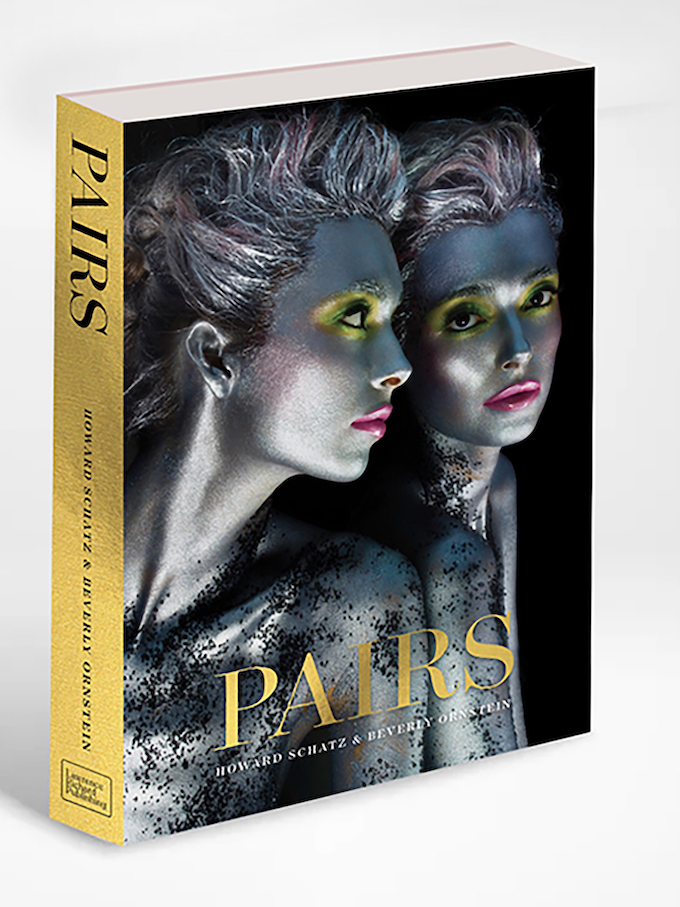
Versatile Howard Schatz Weighs In with His Latest Astonishing Monograph PAIRS by Howard Schatz and Beverly Ornstein Lawrence Richard Publishing 403 Pages. 365 photographs $40.00 This twenty-third entry in Howard Schatz’s tally of published books shares a lot in common with his earlier collections. His latest, Pairs, out this month, brings into focus the most important trademarks of this gifted photographer’s vast body...
More »
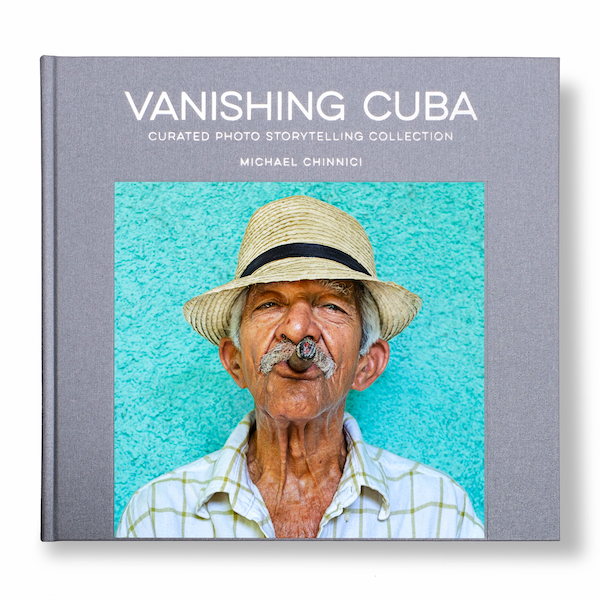
Photo Books: Compelling New Titles for Spring 2023
April 12, 2023
Freshen up your coffee table this Spring with fresh photo books. Michael Chinnici’s Vanishing Cuba: Curated Photo Storytelling Collection is a rhapsody on the beauty, culture, and stories of Cuba. Movement at the Still Point is celebrity photographer Mark Mann’s pandemic project, where he captures images of dancers in motion and also captures their still portraits. Finally, Ernst Haas: The American...
More »