Light Reading: Turning Physics into Art
January 1, 2010
The 1960s surf craze was reaching its zenith about the time I came of age in Southern California. Not that I was much of a participant. I tried surfboarding a couple of times, with, let’s say, inelegant results. Fortunately, that didn’t seem to much matter. Surf-mania had gained the magnitude of a pandemic among baby boomers and skill was not a prerequisite to participate. The surfboard morphed into a preeminent nationwide cultural icon. Some boards leaned against bedroom walls or decorated college dorm rooms in places like Iowa and Nebraska, with the good likelihood that their owners had never even seen an ocean.
I always reserved a dose of admiration for those of my contemporaries, a few close friends among them, who were, in fact, accomplished surfers. The rites of the subculture they’d helped spawn were infectious. We all babbled in that jargon—gremmies, hodads and such; we dressed in white jeans and Pendleton shirts, danced at sock hops to the Beach Boys and the elastic twang of the Ventures and blithely tossed around names from the surfing world’s A-list: Dewey Weber, Hobie Alter, Duke Kahanamoku, Butch Van Artsdalen, Bud Browne, to name a few, along with a mythic character we knew only as The Big Kahuna.
One name that would have made a fitting addition to this roster but never came up, at least outside of a classroom, was Isaac Newton. Surfing is, among its other attributes, a vigorous, extended physics lesson. It relies on, and harnesses, one of Earth’s formidable primal forces, the dissipation of waveform energy as seawater tumbles against a shoreline. In the thousands of photographs and miles of motion picture imagery that have depicted surfing over the years, the core subject is almost always, for obvious reasons, the guy or girl on the board. The drama of a huge, vertical waveface usually serves as the surfer’s backdrop. Changing that priority was clearly on the mind of Hawaii-based photographer Clark Little when he first waded out into the foam, with camera in hand and not a single board surfer in sight. His results have been nothing short of breathtaking.
Little’s self-published hardcover volume, The Shorebreak Art of Clark Little, released last November, is a lavish collection of surf shots, unique in the publishing world, and stunning in their power. Of the 100-plus images, all shot from astonishing vantage points, virtually inside massive breakers, only a spare handful include human subjects (one a self-portrait of the photographer, enclosed in an ominous arch of green water). For the most part, Little’s images are glimpses of a pervasive motif in wave formation: the celebrated pipeline shape—what surfers call the “tube”—that forms when conditions permit a wave top to tumble forward and curve back beneath itself as it breaks. The dramatic barrel configuration inside such a wave, coupled with its duration and its length along the beach, comprise a sort of Holy Grail for surfers. In his introductory page to Shorebreak Art, world surfing champion Kelly Slater rhapsodizes about the tube as a place of “spiritual rebirth [where] time slows down. Things become clearer… there is nothing on earth that can take its place.”
There’s some fascinating science behind such musings. Whether he thinks about it or not, Clark Little, armed with a pair of swim fins and an underwater-housed DSLR, pays homage to a geophysical process that’s as old as our planet. For most of its life, a wave is a form of pure energy moving through a body of water. The water itself doesn’t move in the wave’s direction, but in a circular orbit as the wave passes, creating the familiar rising and falling of floating objects at sea. When this energy reaches the shallows of a shoreline, water does begin to move, forward and upward, gradually piling higher until the resulting aquatic mass collapses under its own weight. This is the moment of the shorebreak. Influenced by prevailing winds, and the shape of the sand or rocks underneath, the breaking wave will maintain some degree of its earlier orbital shape as it surrenders its energy on land. Thus, the tube.
To reveal this process at all, much less in Clark Little’s intimate, luxuriant style of imagery, is not an undertaking for the faint of heart. Particularly where he chooses to concentrate his work, on Oahu’s North Shore, the place where he grew up, and home to the powerful winter surf of Sunset Beach, Waimea Bay and the infamous Banzai Pipeline. Even Little’s peers marvel at his propensity for risk taking in pursuit of these extraordinary pictures. Singer-songwriter Jack Johnson, another North Shore native and expert surfer, recalls in his foreword to Shorebreak Art how Little, who is himself a veteran at surfing this island’s monster shorebreak, “would get so pounded that we would sometimes wonder if he was going to make it to the surface… then every once in a while he would get to his feet… put his weight on his toes… and stand there appreciating a view that very few people get to see.”
The impulse to share this view with the rest of us, surfers and non-surfers alike, was sparked by Little’s wife, who urged him one morning to make a surf photograph for wall décor in their home. Soon after, Little’s passion for the thundering cylinders of the shorebreak became his own one-man photographic genre. Standing in the path of a monster wave, where most of us would swim like hell for shore, Little brazenly experiments with composition and natural backlighting, framing shoreside details in the hollows of the ubiquitous tubes and freezing random wave shapes into luminous sweeps of intricate, glasslike sculpture, rich with amped up chroma. His personal “magic hour” is daybreak, when, he says, “you get the juicy colors, those really bright oranges and reds.”
It’s rare for a photographer to face physical danger in the name of art. Certain wildlife and adventure shooters do this by necessity, and, of course, the handful of combat photographers who, even today, never run short of subject matter. Rarer still is a shooter like Clark Little, whose astounding risk threshold has allowed him to coax powerful and original imagery from a primordial force. Little’s impressionistic pieces are not just breaking waves on a beach in the mid Pacific. They’re more akin to contemporary state-of-the-art astrophotographs of quasars and nebulae—close-up visions of raw energy in the process of spending itself. These are visions almost none of us might ever have witnessed without this exceptional collection.
Jim Cornfield is a veteran commercial photographer and travel writer based in Malibu Canyon, CA. He is a regular contributor to Rangefinder.
Related Articles

Exposure! – Julia Boggio’s New Book Set at Fictionalized WPPI
August 5, 2024
What do you get when you bring together thousands of photographers with big talent and big personalities in “Las Vegas, a place where anything can happen”? That describes WPPI — the largest photo conference in the world –- to a T, and in the keen writerly eye of Julia Boggio, the answer is “drama and romance.” Her final novel in...
More »
Howard Schatz’s 23rd Volume: A Photographic Pas de Deux
October 18, 2023
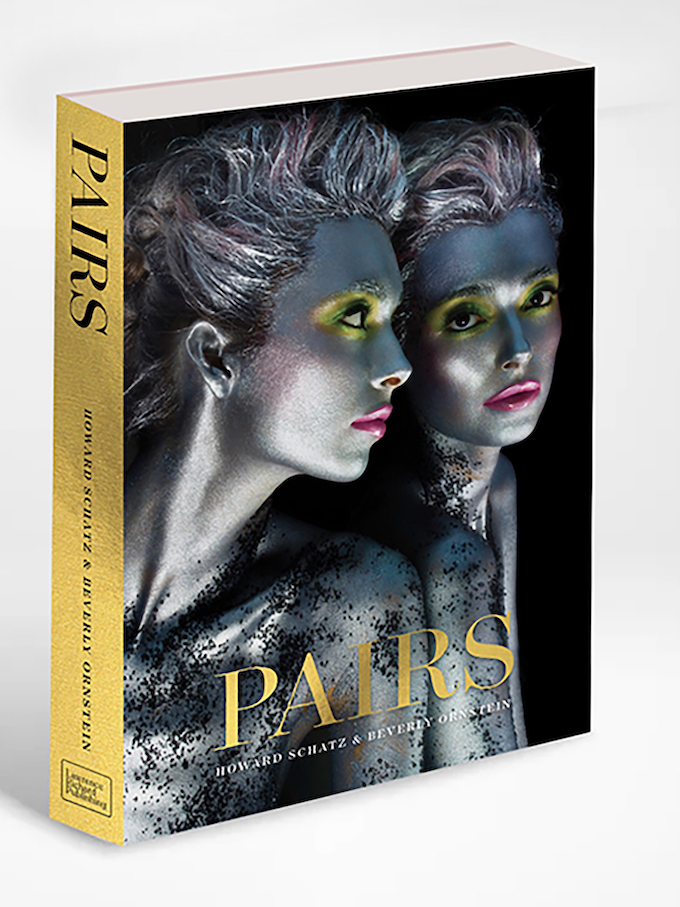
Versatile Howard Schatz Weighs In with His Latest Astonishing Monograph PAIRS by Howard Schatz and Beverly Ornstein Lawrence Richard Publishing 403 Pages. 365 photographs $40.00 This twenty-third entry in Howard Schatz’s tally of published books shares a lot in common with his earlier collections. His latest, Pairs, out this month, brings into focus the most important trademarks of this gifted photographer’s vast body...
More »

Photo Books: Compelling New Titles for Spring 2023
April 12, 2023
Freshen up your coffee table this Spring with fresh photo books. Michael Chinnici’s Vanishing Cuba: Curated Photo Storytelling Collection is a rhapsody on the beauty, culture, and stories of Cuba. Movement at the Still Point is celebrity photographer Mark Mann’s pandemic project, where he captures images of dancers in motion and also captures their still portraits. Finally, Ernst Haas: The American...
More »