4 Approaches to Soft Focus Explained
October 14, 2014
Soft-focus techniques and gadgetry date back to photography’s origins, and today the art of soft focus has made quantum leaps in simplicity due to digital imaging. “Soft focus” is not necessarily the same as “out of focus.” In fact, lenses have been created for the express purpose of degrading sharpness in designated areas of an image.
The most illustrious of these lenses was the Rodenstock Imagon, developed in the 1920s to preserve what its inventor called “romantic softness without sugariness.” Canon, Nikon and other manufacturers still include similar adjustable soft-focus lenses in their inventories—specifically for portraiture.
There are dozens of ways to selectively reduce sharpness. Soft focus can just as readily enhance an image as impair it. Lens-mounted diffusion filters, bits of translucent fabric and a little smear of Vaseline are all important additions to every shooter’s creative toolbox, and along with them, software developers have brought to the table easy-to-use but powerful innovations that take “the soft touch” into the realm of after-capture. What follows is a look at a few versatile, accessible approaches for using soft-focus tools both in-camera and in your digital darkroom.
Related Links:
Getting Acquainted with Frequency Separation Retouching for Headshots
Taking Stock of Your Editing Toolbox
Software Review: Photoshop CC 2014
Related Articles
A Trio of Announcements from Sony
July 14, 2023
Sony just announced several new products including the FE 70-200mm f/4 Macro G OSS II lens, the a6700—its latest APS-C mirrorless camera—and the Sony ECM-M1 Compact Camera-Mount Digital Shotgun Microphone. All three should be available in August but we got a sneak peek to share with you ahead of shipping. Sony FE 70-200mm f/4 G OSS II Most photographers (at...
More »
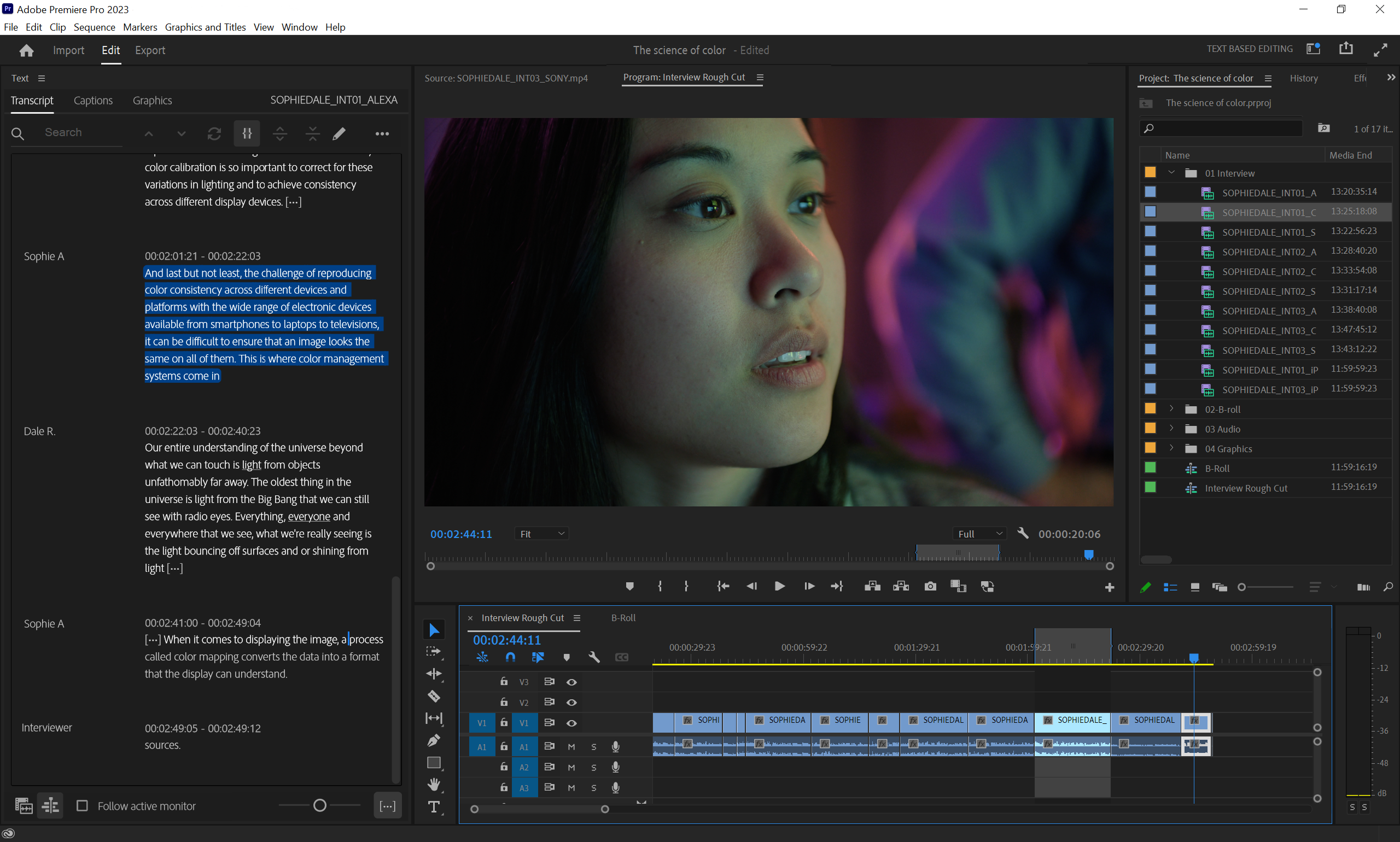
ADOBE UPDATES PREMIERE PRO
April 13, 2023
Just in time for this year’s NAB, Adobe announced some updates to Premiere Pro—the software that was used to edit 2023 Oscar-winning films such as Best Picture winner Everything Everywhere All at Once (which racked up a total of seven Oscars including Best Editing and Best Documentary Feature, Navalny). And while you may not have Oscar aspirations, Premiere Pro has...
More »
What’s Inside My Camera Bag: Filmmaker Jordan Bunch’s Go-To Gear for Documentary Shoots
August 5, 2021
If you looked inside the camera bag of a filmmaker, what would you see? Film guru Jordan Bunch reveals the gear he carries for with him on documentary shoots.
More »