
Canyon Wilderness of the Southwest
April 1, 2009
New York photographer Jon Ortner is certainly not reluctant to tackle large projects. His portfolio of advertising and architectural photography, four magnificent large format books and an impressive compilation of other outstanding work are proof of that. But a definitive book on the canyon country of America’s Southwest is a mammoth undertaking by any measure.
While photographing the canyons and desert terrain of the Southwest is no walk in the park, the region’s relative proximity to centers such as Las Vegas and Salt Lake City contribute to its immense popularity as a subject for photographers, artists and authors. So, an additional challenge for Jon Ortner in photographing for this latest book Canyon Wilderness of the Southwest was creating work that would stand out from, even above, previous volumes of images and words about this unique corner of the Earth.
By comparison, three of Jon’s previous highly acclaimed books focused on relatively remote regions such as Bhutan, Laos and Myanmar, which put them beyond easy reach of most photographers. (Jon’s fourth large format book, Manhattan Dawn and Dusk, is set closer to home.)
Book titles such as Where Every Breath is a Prayer: A Photographic Pilgrimage into the Spiritual Heart of Asia; Angkor: Celestial Temples of the Khmer Empire; and Buddha speak to the exotic locales Jon has captured and written about—locales that posed their own logistical obstacles, requiring extensive travel and numerous visits over many years.
As Jon points out, “Every Breath is a Prayer, which is about Buddhist and Hindu pilgrimage, was the result of 15 years of travel in the Himalayas and Southeast Asia. The Angkor book took six or seven journeys to Cambodia and eastern Thailand, some for as long as three months, over a 10-year period. The Buddha book was also the result of five extended shoots in Myanmar, Laos and Thailand.
“I knew from the very beginning that, unlike other places that I worked in which still offer unseen wonders for photographers, the American Southwest has been written about, featured in countless movies, and extensively photographed for more than 100 years by some of the greatest photographers in the world.
“How was I to create something artistic and beautiful that somehow portrayed the very soul of the most spectacular landscapes on Earth? How could I add to an already vast body of work graced by such photographic luminaries as Ansel Adams, Edward Weston, Adam [Clark] Vroman and Eliot Porter right up through the current masters of the Western landscape including Jack Dykinga and David Muench?”
Jon also posed another vital question: “What is at the core of creating art?” His answer is revealing, both about the man himself and why his books offer so much more than simply a visual document of his subject matter. “Passion of course, and a lot of hard work. Perhaps most important was knowledge—scholarship is the foundation of understanding, it leads the way to the deepest meanings of a place. So, I began to read what the great writers had written about the West: Edward Abbey, John Wesley Powell, Clyde Kluckhohn, Terry Tempest Williams and others. For years I immersed myself in the truly remarkable stories about the discovery and mapping of the geologic wonders of the West. Along with the great literature, I immersed myself in the science of the processes that have created these ancient landscapes—the geology, the natural history, the meteorology and, of course, the ancient human history,” he says.
The final piece of the puzzle came together by harnessing the Internet. “In terms of practicality, all hotels and flights were reserved and purchased through the Web. I also used the Web to get my permits for areas with restricted entry, such as The Subway and the Virgin River Narrows in Zion National Park [in Utah], and The Wave in Vermilion Cliffs Wilderness [in Arizona]. Many now require a lottery system to receive hiking permits. By scanning through websites I could also see what other photographers were shooting at these remote locations,” he says.
Including the massive amount of research and reading prior to the initial shooting trip in spring of 2005, Jon’s canyon project has taken five years from inception until publication in November 2008. His powerful images are complemented by evocative and informative text, including a section of extensive notes about selected locations and photographs. Combined, they provide a wealth of scientific and historical facts on geology and geography, exploration and settlement. As an example: Did you know that the 39-mile Paria River gorge is the longest and narrowest slot canyon in the world? Or that Boulder, UT (population: 126), was the last town in the United States to receive its mail by mule and didn’t have electricity until 1948? Well, you do now.
For thousands of years, before any foreigner ever ventured here, this land was a spiritual and sacred sanctuary for Native Americans, who to this day treat it with ancestral reverence and respect. Jon Ortner was cognizant of this religious significance, treating access as a privilege. “Some of the most spectacular locations in the West are on Native American tribal land. Several of the most exotic locales in the book are on the Navajo and Hopi Reservations and photography on their land is forbidden without permission. So photographers should pay the correct fees and be accompanied by a licensed guide to traverse and photograph on reservation land. I have several guides that I work with out of Kayenta and Page, AZ. Mystery Valley, Hunt’s Mesa, Ha Ho No Geh Canyon, Hanooji Canyon and Moenkopi Wash are some of the most remote and forbidding places remaining in America. I consider it a rare privilege every time I get a chance to work there,” he says.
Jon also chose not to include any human presence in his images. “As spectacular and important as the ruins and art left by Native Americans are, I decided early on that this would be a book about wilderness—the desert and the rock itself—the history of man in this region would have to be another volume,” he says.
Equipment, Film, Logistics
Those familiar with images of the Southwest’s canyons will appreciate their spectacular shapes and vivid hues–from intense colors to the more subtle range of pastel colors and also vistas that could only be accurately portrayed as panoramas. Jon shot entirely with film—Fujichrome Velvia 50 for color and Kodak T-Max 100 for black and white. “From the beginning I felt that the panoramic camera would be able to create unique and powerful images—a perfectly suited format for photographing the expansive landscapes of the west. It was also a format that is somewhat unusual, in that it is less common than 4 x 5, which I also shoot in New York. The quality is superb, and making prints from the 6 x 17cm Velvia transparencies, or the 6 x 17cm T-Max 100 negatives, gives spectacular quality. Sharpness, detail, contrast and color rendition is unsurpassed,” he says.
Almost all of the photographs were made at sunrise or sunset and for the medium format images, a German black-and-white polarizer was used. As panoramas cannot be polarized, Jon created the rich, saturated colors of the sky by slightly underexposing those images. “Since there are 10 gatefolds that open to four feet, I wanted extraordinary quality. I used 120 and 220 films, which I ran through both the Pentax 6 x 7 and the Fuji 6 x 17cm bodies. When using the T-Max 100, I darkened the sky with a variety of black-and-white filters such as dark red and orange,” he says.
Given the amount of equipment Jon used—two cameras and a total of about 12 lenses; Induro tripod; exposure meter; and film—combined with the physical exertion required to reach locations, fitness and stamina were definitely prerequisites. Everything was packed into a Tamrac Expedition 8 Photo backpack. With one gallon of water, food, first aid supplies, maps, compass and other necessities, Jon’s minimal kit weighed about 45lbs. On what he terms “the monster treks,” such as the Paria slot, or Chesler Park in Canyonlands, he carried upwards of 65lbs.
Jon says, “With that amount of weight, extreme care must to be taken on every boulder hop and stream crossing. Each time you look away to enjoy the view you risk a sprained ankle or much worse. We hiked an average of six to eight miles a day. Some days were 10 to 12 miles; our longest day was 18 miles in the Paria Slot Canyon, Vermilion Cliffs wilderness. To set up and shoot 20 to 50 rolls of film, and walk 10 miles, is a good dawn to dusk workout.”
In general, if a location was fewer than 20 miles in, Jon and his team chose to do it in one long day hike, often on the trail before sunrise using flashlights. “We were often at the shoot location at sunrise, 6:30 a.m. or 7 a.m. We then would explore, shoot, rest, have lunch, and return in the late afternoon, arriving back at the trailhead sometimes by flashlight, at 7 p.m. or 8 p.m. I usually have a rented four-wheel drive SUV available from Las Vegas or Salt Lake City. In one recent trip I put over 5000 miles on it in a month and a half of shooting,” he says.
Those strenuous hikes were not haphazard affairs. During his extensive research, Jon had prepared a shoot list—essentially a hybrid field guide and storyboard with all pertinent data. Information garnered from books, websites, magazines, field guides and similar covered aspects such as distances, trail conditions, hours of sunrise and sunset, special features to look for, orientation of the formation and potential hazards. “It is no fun to drive thousands of miles and hike with heavy packs over long and rugged trails to a remote formation, only to arrive 20 minutes too late. Only other photographers understand this—make sure your partner appreciates your diligence and dedication before you arrive on location.” Jon’s sage advice is that “vacations and serious photography do not mix well.”
The Power of Water
And while the intricate rock formations, indescribable patterns, spectacular vistas and a plethora of natural wonders and oddities—such as huge boulders perched atop eroding pillars that will one day collapse under the boulders’ weight—provide a visual feast, Jon has also included images of a powerful force that has helped shape this landscape: water. Long exposures portray water flowing through the canyons as a beautiful, almost mystical element. That tranquility belies the deadly nature of water under different circumstances. “Water and its depiction was a double-edged sword. The heart of the book is the richly colored and sinuously shaped slot canyons of southern Utah and northern Arizona. As most canyoneers know, being in a slot canyon during any kind of rain is extremely dangerous. People are killed each year by the flash floods that race down these narrow canyons—these surges carve the canyons and they are deadly. Most of the slot canyons were photographed in the relatively safe spring season, but that meant most of them were also dry. Ideally you want some water, but anything above your waist means a long and difficult traverse—and the possibility of ruining all your equipment. Hypothermia is also a real concern, because the slots are so dark and cold. Eight hours with your feet immersed in cold water can bring trouble even in the desert,” says Jon.
Postproduction
Files for large fine art prints—up to 600MB—were usually created on a Heidelberg Tango drum scanner. For the book, all original transparencies went to Hong Kong where the printer, Lotus Press, scanned them. Three sets of color proofs were then color-corrected in New York in color-calibrated daylight viewing booths, and compared to the original transparencies on a color-calibrated lightbox.
Creating a book of this complexity, quality and size requires a team effort and Jon is unstinting in his praise for team members. “Lena Tabori, publisher of Welcome Books, set the basic outline of how big, what it will sell for, and when it will be published. Alice Wong, production manager, with Greg Wakabayashi, book designer, decided on the exact size, number of pages, approximate number of images, gatefolds, text pages, number of chapters, and associated aspects of editing and organizing the images. Martha McGuire, my studio manger, life partner, and expert computer technician, split the huge task of FPO (for position only) scans, on a Nikon Coolscan 9000 and an Epson 10,000 XL PH Photo Expression flatbed scanner. We then made minor color corrections in Photoshop, just so we could get an idea of color flow and distribution. We scanned about 500 transparencies to start the layout and then scanned additional alternates as the final design came together. In all, the design took about a year to complete,” says Jon.
Now that Canyon Wilderness is ready for launching, is Jon satisfied? Did his photographs meet his aspirations and hopes? “Some of the images exceeded my expectations—others fell short—but the experience of being there was never anything less than spectacular. It is not possible to be bored when surrounded by wilderness. It is the most fulfilling way to spend one’s life,” he comments.
To see more of Jon Ortner’s work visit: www.ortnerphoto.com.
Peter Skinner is a freelance writer, photographer and author with more than 25 years experience in the photo industry in public relations, media liaison, corporate communications, and workshop production and coordination. His magazine articles and photography have been published internationally and he has co-authored or edited numerous publications and books including the 5th and 6th editions of the authoritative ASMP Professional Business Practices in Photography (Allworth Press). His latest book is Sports Photography: How to Capture Action and Emotion (Allworth Press). He can be reached at: [email protected].
Related Articles

AIBP’s Boudoir Photography Competition: The Visionary Awards
August 21, 2024
The Association of International Boudoir Photographers (AIBP) has announced their inaugural edition of the AIBP Visionary Awards, a boudoir photography competition. Since 2009, AIBP has been the leading boudoir photography association, providing a community space for photographers to enhance their craft, build their business, network with colleagues and explore educational resources. Their new competition is accepting submissions from now until...
More »
Legend Elopement Photography Awards: Round 2 Winners
July 30, 2024
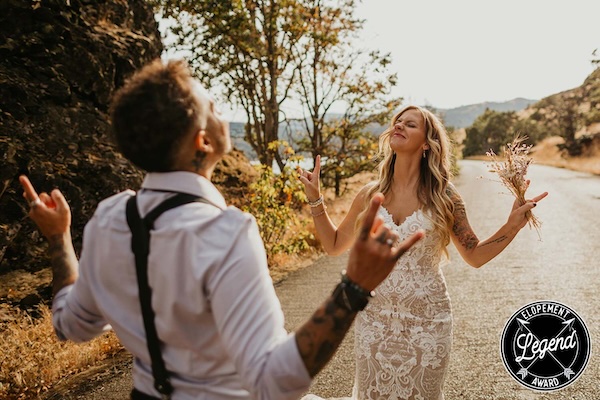
The Legend Awards is a photo competition for elopement photographers to show off their documentary photography skills. This article features some of the award winning images from Round 2. See the full gallery of winners here. What stands out in each of the award-winning photos is the emotion and personality of every couple. In these images, we can learn something about...
More »
Icons of Fashion Event with AB+DM & Lindsay Adler
July 24, 2024
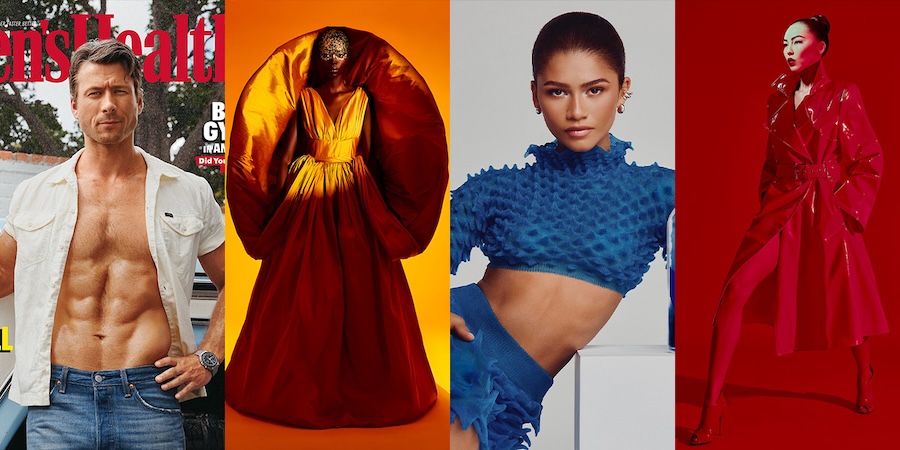
Beloved WPPI educator Lindsay Adler will be joining with AB+DM Studio – Ahmad Barber and Donté Maurice – for an exciting weekend event entitled Icons of Fashion. Part lecture and part shootout, this event offers “a behind-the-scenes look into the world of fashion photography and creative mastery.” On the first day, attendees will have access to multiple iconic fashion looks...
More »