Windows of the World
October 1, 2009
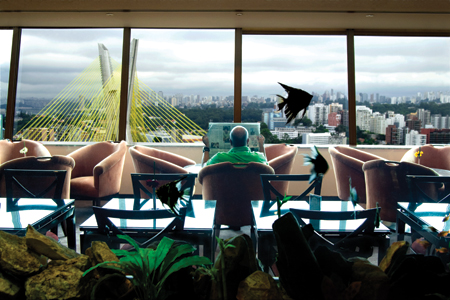
For Ted Kawalerski, his personal projects have always been about discovery—for him as much as for the viewer. More specifically, there’s serendipity within his personal work that only adds to the texture of the images he creates with his camera.
Even though Kawalerski is based in New York, his work over the past 25 years has taken him around the globe to places such as India, China and Africa. He has photographed for various corporations, graphic design firms and advertising agencies like Liberty Mutual Group Inc., Bausch & Lomb, Chevron, Ernst & Young, Johnson & Johnson, and Xerox, to name a few. Through many of these journeys he found a moment, a reflection in a window, which caught his eye and attention.
Kawalerski became seriously interested in photography while in the Army, during his last active tour of duty stationed in West Berlin in 1971. According to him, there were incredible darkrooms available for them to use and at the time photo equipment was relatively inexpensive through the Post Exchange. After his military obligation ended, Kawalerski decided to pursue photography as a career.
But it was only about six years ago when he took a closer look at some of the prints he had made over the past 25 years that he realized he had a large body of work that used windows as a common reference point. Whether it was through the use of a window as a framing element or a reflection of a scene beyond, these images quickly became part of a collection he called the “Windows Project.”
“The first picture that appears in this collection was made about 25 years ago at the National Gallery in Washington, D.C.,” says Kawalerski. “I have never gone out looking to specifically make these pictures. As I have traveled over the years, these images have just happened. Within the last several years, it became apparent that I had a significant body of work for a show and/or book. This is indeed going to be an ongoing project.”
While this first image in this collection was taken some 25 years ago, it wasn’t the one to really inspire Kawalerski. According to him, he was on a family holiday in Europe about 15 years ago—hobbling around on crutches with a broken leg—when he spotted something in an old German town that made him pause. With his Nikon F3 film camera dangling around his neck, he stopped and quickly set up a picture of flowers in a window with a reflection of old town buildings in the glass. It was this photograph, even more than the one at The National Gallery, which inspired him to continue along the same theme.
“In spite of the fact that a great deal of photography is derivative, I was not at all inspired by any other work,” comments Kawalerski. “In this case, things just started. I didn’t plan on it. I began using windows as framing devices and now the collection is currently up to about 30 premium pictures.”
In his personal projects, Kawalerski tends to lean more towards large thematic subjects, such as his “Hudson River” project. According to Kawalerski, it’s neither a travel documentary nor a chronology of the river. The project was about the connections the people and the landscape had with each other.
In the “Windows Project,” many of the images Kawalerski captures revolve around people and viewing them in different ways—through windows, into windows with reflections of the city or landscape behind, or a juxtaposition of images. Kawalerski shares, “This is a much more conceptual project than ‘Hudson,’ or even some of my other projects. In this project specifically, I tend to gravitate toward very graphic and colorful images.”
Creative Explosion
“I don’t have a compulsion to go out every day to take photos just to take photos. That’s not my style. I’ve never worked that way. I’m very passionate about my photography and the images I make, but in most of my personal projects, the images simply happen. But I am very particular about how I look for photos. To me, photography is about seeing things. A good photo is about seeing what people look at,” says Kawalerski. “Graphic compositions are extremely important in all of my work but in the case of the ‘Windows Project,’ this is paramount. I don’t choose subjects—they just quickly happen.”
According to Kawalerski, photography is about making connections. One of the most important connections he made during the project was with fellow photographer Brian Stanton. “His input was an important element in getting this project off the ground. You need people—friends and colleagues—to give you a kick in the ass sometimes,” Kawalerski shares. “They can offer unique insights. It’s not just me being inspired for a specific project. It also takes support from your peers.”
The last six years has been a “creative explosion” for Kawalerski since he’s turned his attention to his personal work. And he’s found himself experimenting and attempting new techniques he normally might have avoided.
“One thing I’ve come to realize over the course of my career is that all good commercial photographers are involved in personal projects. And those projects are what buyers look at to get a sense of the photographer. Today, high-end commercial art buyers are looking for artists. They’re looking for that spark of personality that defines a photographer and draws a connection between them.”
For the “Windows Project” in particular, he has shifted away from the more documentary feel of his “Hudson Project” and toward a much more abstract, intangible fine art approach to his subjects. “People are more interested in fine art. It’s more conceptual, more graphic. It’s more universally appealing,” he comments. “If you’re not evolving, you can’t stay on top of your game.”
You can view more of his work at www.tedkawalerski.com.
Tech Behind the “Windows Project”
Since the images from Kawalerski’s “Windows Project” span nearly three decades, the technology used to capture the scenes in this collection has changed dramatically. His earliest photographs were captured using a Nikon F3 and color transparency film, specifically Kodak Kodachrome KR 64 and Fujifilm Fujichrome Velvia RVP 50.
Kawalerski transitioned to digital for both his personal and commercial work about six years ago. He began with a Canon EOS 1D Mark II, upgraded to the Canon EOS 1D Mark III, and most recently began using the Canon EOS 5D Mark II.
In addition to moving away from darkroom chemicals, Kawalerski discovered several additional advantages to a digital workflow. Adobe Photoshop allows him to make fine adjustments in these photos, especially in the image densities, that would have been impossible in the darkroom. Imagenomic’s imaging software suite including Noiseware, Portraiture 2 and RealGrain, helps him refine the details in his photographs while saving him hours of retouching.
Using an Epson Stylus Pro 4800 on both Epson Enhanced Matte paper and Calumet Brilliant Museum Silver Gloss White, Kawalerski prints his own artwork. He prefers a standard size—15.5 x 22.5 inches—and frames the images in his projects the same way. Kawalerski saves time and money on ink and paper by properly calibrating his monitors and printers with Datacolor’s Spyder3 Studio color management system.
Meredith R. McKay is a freelance writer based in New York. She has been writing and editing for the past 10 years.
Related Articles
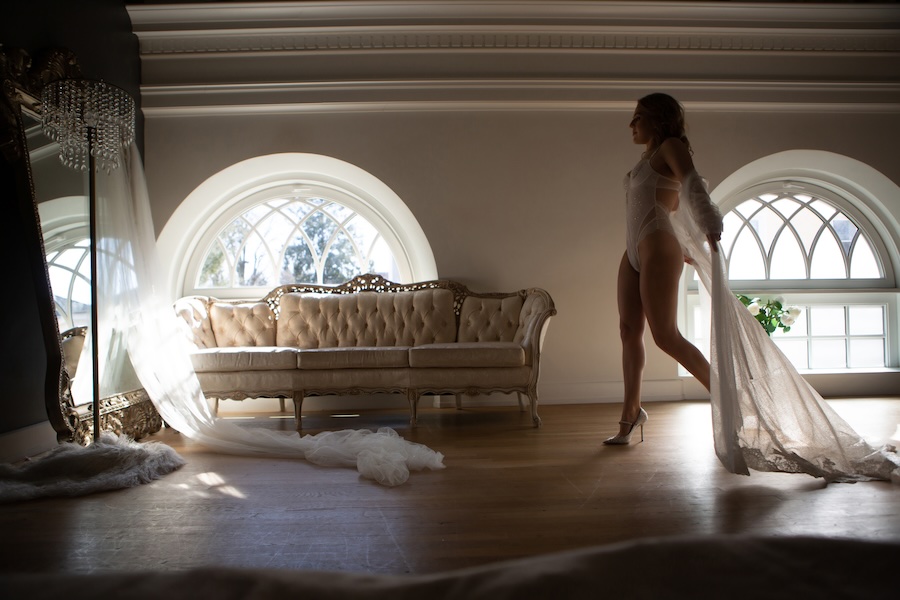
AIBP’s Boudoir Photography Competition: The Visionary Awards
August 21, 2024
The Association of International Boudoir Photographers (AIBP) has announced their inaugural edition of the AIBP Visionary Awards, a boudoir photography competition. Since 2009, AIBP has been the leading boudoir photography association, providing a community space for photographers to enhance their craft, build their business, network with colleagues and explore educational resources. Their new competition is accepting submissions from now until...
More »

Legend Elopement Photography Awards: Round 2 Winners
July 30, 2024
The Legend Awards is a photo competition for elopement photographers to show off their documentary photography skills. This article features some of the award winning images from Round 2. See the full gallery of winners here. What stands out in each of the award-winning photos is the emotion and personality of every couple. In these images, we can learn something about...
More »
Icons of Fashion Event with AB+DM & Lindsay Adler
July 24, 2024
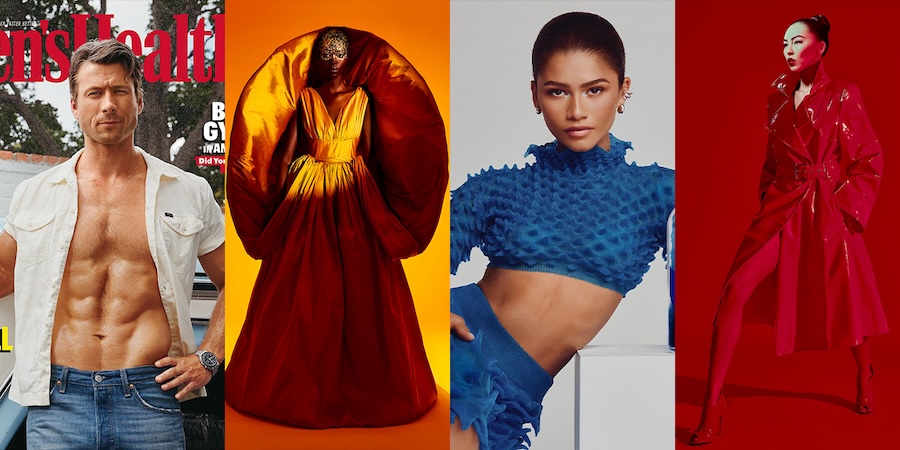
Beloved WPPI educator Lindsay Adler will be joining with AB+DM Studio – Ahmad Barber and Donté Maurice – for an exciting weekend event entitled Icons of Fashion. Part lecture and part shootout, this event offers “a behind-the-scenes look into the world of fashion photography and creative mastery.” On the first day, attendees will have access to multiple iconic fashion looks...
More »